
Esc

↑↓ move Enter openFull search with filters

Questa sezione non è ancora tradotta. Il contenuto seguente è mostrato in inglese, come pubblicato. Leggi la versione inglese.

Last reviewed · How we check sources

News desk

Cooling and power news

Launches, orders and deals that matter to data centre buyers. Each story has a short CoolPower Index page on what changed and why it matters, with a link to the original source.

  • 188stories
  • 161original publishers
  • 11categories

Lead story UPS & Power Distribution

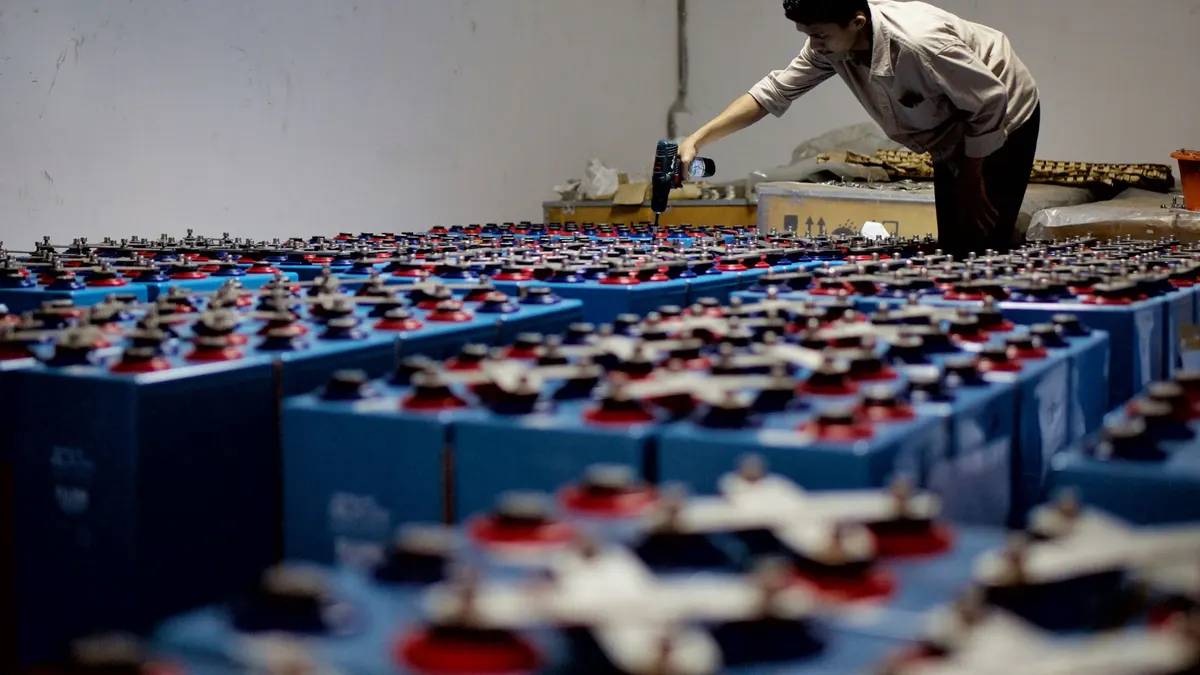
Allegro MicroSystems launches current sensors and drivers for 800 V power distribution and 48 V server fans and pumps in AI data centres

Data Centre Solutions reports that Allegro MicroSystems has launched wide-body versions of its ACS37030 and ACS37002 current sensors with 6,000 V of galvanic isolation for 800 V rack power, an AHV85311 isolated gate driver for silicon carbide FETs that Allegro says can cut board space by up to 50%, and an updated QuietMotion A89333 48 V motor driver for server cooling fans that the company says also suits liquid cooling pumps. Power supply maker Acbel Polytech has integrated the current sensors into its AI data centre power products. Performance figures are the company's own.

Read our summary View original source (opens in a new tab)

Source: Data Centre Solutions (original source, opens in a new tab)

How a story reaches this page

Four steps for every item. Counts are from the stories on this page.

  1. Original source161 publishersEvery story starts from a company release, filing or named publisher
  2. What changed188 storiesA short summary of the launch, order or deal
  3. Why it matters23 with analysisOur own note on what it means for buyers
  4. Where it fits11 categoriesLinked to the supplier category and related records

All stories

188 news items shown including the lead story

Prefabricated Modular Infrastructure

Armada and Johnson Controls start production of Leviathan modular AI data centres in Dublin, with the first unit bound for Fossefall in Norway

Armada and Johnson Controls said on 11 November that Galleon Forge Two, Armada's first European manufacturing operation, is in continuous production inside a 90,000 sq ft Johnson Controls facility in Dublin, supported by about 700 Johnson Controls engineers, technicians and other workers. The first Dublin-built Leviathan, a multi-megawatt modular data centre engineered, integrated and tested on site, is headed to Fossefall in Norway, which has ordered five units totalling more than 9 MW for delivery by the first quarter of 2027; Australian developer WinDC plans 11 MW. Johnson Controls supplies the thermal side, including coolant distribution units, chillers and building controls, with what the companies call zero-water cooling. The partners target at least 500 MW of capacity in 2027 (their target, not installed capacity); continuous production at Galleon Forge One in Gilbert, Arizona, is expected to begin in early 2027, and a further site is planned in Edmonton, Canada.

Source: Armada (press release) (original source, opens in a new tab)

Heat Rejection

AWS opens its South America (Chile) Region to selected customers, with more than US$4 billion of planned investment and primarily air-cooled data centres

Amazon said on 11 November that the AWS South America (Chile) Region, its first in Chile and third in Latin America, is operational in early access for selected customers, with general availability expected by the end of 2026. Amazon plans to invest more than US$4 billion in Chile to support the Region, which it estimates will add more than US$7.5 billion to Chile's GDP and support an average of 4,100 full-time equivalent jobs a year. Like every AWS Region it has at least three separate Availability Zones, each with independent power, cooling and security. Amazon says the Chilean data centres will be primarily air-cooled and will not need ongoing cooling water in operation. Early customers include BancoEstado, BTG, Cencosud, Consorcio, Itaú and Ripley. Figures are Amazon's own estimates.

Source: Amazon (company news) (original source, opens in a new tab)

Heat Rejection

BBC: residents oppose the East Havering data centre campus at North Ockendon on London's green belt, as a GLA report puts London grid connection waits at seven to 13 years

The BBC reports that Digital Reef's proposed East Havering Data Centre campus at North Ockendon, on green belt land in east London, would be one of the largest in Europe if approved, and that local residents and Friends of the Earth oppose it over construction traffic, noise, power and the planning process. The article quotes a report for the Greater London Authority, London's Data Centre Future Growth Forecasts and Strategic Insights, which calls energy 'the single most critical constraint' on London's data centre growth and says new grid connections may take seven to 13 years, against three to seven years in other European markets. The same report says a 100 MW hyperscale data centre in the UK can use up to 2.5 billion litres of water a year, and that data centres use about 5% of London's drinkable water, expected to rise to 7%. Barbour ABI expects about 100 more UK data centres on top of about 477 today, 28 of them in the Thames Water catchment. The draft London Plan says green belt should only be considered if no brownfield site is available. Figures are as reported by the BBC.

Source: BBC News (original source, opens in a new tab)

Gensets & On-site Power

BloombergNEF tracks 181 GW of gas-fired generation proposed alongside data centres, more than 90% of it in the US, and sees data centre demand almost quadrupling by 2035

BloombergNEF said on 11 November, in a report commissioned by Bloomberg Philanthropies (Powering the Data Center Boom: How Grid Policy Can Deliver Clean Power Faster), that it expects data centre electricity demand to almost quadruple to 2,354 TWh by 2035, equal to 7% of global electricity consumption. It has tracked 181 GW of announced gas-fired generation proposed alongside data centres, more than 90% in the US, and says this pipeline varies widely in maturity and is an indication of potential scale, not a forecast of what will be built. If all announced on-site gas plants for US data centres were built and run on BNEF's assumptions, they would emit about 345 million tonnes of CO2 equivalent a year, 152 million tonnes more than if the same capacity drew average US grid power. The report reviews grid connection policies in 17 markets and finds limited evidence so far on which work best. For India it puts data centre demand rising from 11 TWh in 2025 to 91 TWh in 2035, and for Malaysia from 7 TWh to 45 TWh. These are BNEF's modelled figures.

Source: BloombergNEF (press release) (original source, opens in a new tab)

Switchgear & Transformers

China invested 728.8 billion yuan in intelligent computing infrastructure in the first three quarters of 2026, but only 13.6% of projects are in operation, TechNode reports

TechNode reports that investment in intelligent computing infrastructure in China reached 728.8 billion yuan (about US$109 billion) in the first three quarters of 2026, while only 13.6% of the projects had entered operation and 71.6% were still in planning and preparation. It says China had 15.56 million standard data centre racks in operation and 2,185 EFLOPS of intelligent computing capacity at June 2026, up 177% year on year, and that at least 158 projects with winning bids above 100 million yuan each, worth more than 113 billion yuan in total, were recorded in the first seven months of 2026, with telecom operators behind more than half of the large tenders. TechNode expects 2027 to be a major delivery year. Figures are as reported by TechNode, which does not name the underlying statistics source for each figure.

Source: TechNode (original source, opens in a new tab)

Switchgear & Transformers

Citi says rising costs and new rules after the US midterms will make data centres dearer and slower to build, but will not end the boom

Investing.com reports that Citi strategist Steph Choe told clients on 11 November that additional permits, reviews and regulations after the midterm elections could lengthen development timelines, raise costs for tenants and make financing more expensive, but that Citi expects demand for chips, computing power and infrastructure to stay resilient. Citi noted that high-yield bonds issued in 2025 for data centres already completed and powered have sharply outperformed bonds issued in 2026 for projects still under construction, and that high-yield AI spreads are almost 200 basis points wider than non-AI peers. It expects fewer data centre bond sales in the high-yield market next year, with funding moving to other capital markets. Citi's equity research forecasts AI token production growing 236% a year for five years and generative AI rising from 26% of data centre demand in 2026 to about 82% by 2031. These are Citi's forecasts.

Source: Investing.com (original source, opens in a new tab)

AI and Data Centre Chips

CoreWeave's chief executive cancels his share sale plan after Q3 results, keeping 1.85 GW of active power as the end-2026 target

CoreWeave chief executive Michael Intrator told CNBC on 11 November that he has cancelled his 10b5-1 share sale plan after the company's third-quarter results, saying the plan is 'sidelined' until there is a material change in the share price and that any further selling would be for tax. CNBC reports he sold 8.26 million shares at an average of US$96.14 under the plan announced in November 2025, about US$794.2 million in total. CoreWeave still expects 1.85 GW of active power by the end of 2026 and now guides full-year capital expenditure of US$37bn to US$39bn (its own forecast). On the results call Intrator said the company does not expect an impact from the post-election regulatory shift; CNBC cites Ballotpedia that voters backed greater restrictions on data centres in 40 of 41 local ballot measures in 10 states on 3 November. Figures are as reported.

Source: CNBC (original source, opens in a new tab)

Prefabricated Modular Infrastructure

EPG Modular Data Center tops out a S$153 million modular data centre factory in Johor, due for completion in the first quarter of 2027

TNGlobal reports that EPG Modular Data Center marked the topping-out of its S$153 million (about US$119 million) factory in the Malaysia Free Industrial Zone at Senai Airport City, Johor. The plant covers 107,450 square metres, of which 70,000 square metres is production space, and is scheduled for completion in the first quarter of 2027. EPG says production lines are designed for at least 80% automation, that the site can employ more than 800 professional and technical staff once fully operational, and that it plans local supplier partnerships in steel structures, electrical infrastructure, mechanical systems and cables. Figures are as reported.

Source: TNGlobal (original source, opens in a new tab)

Heat Rejection

Equinix opens CH5 in Elk Grove Village, its sixth Chicago-area data centre, after a US$215 million initial investment, with air cooling that needs no routine water

Equinix said on 11 November that CH5, its sixth International Business Exchange data centre in the Chicago metro area, has opened in Elk Grove Village, Illinois, backed by an initial investment of US$215 million. At full build-out it is expected to provide more than 190,000 sq ft of colocation space. Equinix says CH5 uses air cooling that requires no routine water consumption for cooling, with cooling plant on the roof. Construction created about 150 local jobs and the site is expected to support up to 50 permanent staff. No power capacity was given.

Source: Equinix (company blog) (original source, opens in a new tab)

Prefabricated Modular Infrastructure

POSCO and GS Group sign an MoU to build AI data centres together, with GS Caltex taking charge of liquid cooling and POSCO supplying steel from the design stage

The Korea Herald reports that POSCO and GS Group signed a strategic memorandum of understanding in Seoul on 11 November to pursue AI data centre projects in South Korea and then overseas. GS Group will lead infrastructure development, with GS E&C handling project planning, power supply, engineering and construction and GS Caltex taking charge of liquid cooling. POSCO will apply its early vendor involvement programme, supplying data centre steel products such as corrosion-resistant PosMAC plate, electromagnetic shielding and high-efficiency electrical steel from the initial design stage, and will contribute HVAC expertise from its steelworks. The companies plan a joint working group and later target North America and Asia. No project sites, capacities or investment values were given.

Source: The Korea Herald (original source, opens in a new tab)

CDUs & Direct Liquid Cooling

ToneCooling publishes measured datasheets for GB300 and GB200 direct-to-chip cold plate kits: about 1,067 W per GPU plate at 1.7 L/min

Chinese cold plate maker ToneCooling published datasheets for two standard direct-to-chip kits on 11 November. In the company's own steady-state test with pure water, each GPU cold plate in its GB300 NVL72-class tray kit removed 1,066.94 W at 1.7 L/min with a 12.06 kPa pressure drop and a thermal resistance of 0.0130 to 0.0133 °C/W; each CPU plate removed 485.46 W at 0.7 L/min. The GB300 kit is designed for 800 to 1,200 W per GPU, pure water or PG25, a 20 to 30 °C inlet and up to 3 bar, and a full NVL72 rack uses 18 kits; the GB200 kit is rated 1,200 W + 1,200 W + 300 W and a rack uses 36. These are manufacturer test results, not independent measurements. The company quotes 4 to 6 weeks for samples and 6 to 8 weeks for production.

Source: ToneCooling (press release) (original source, opens in a new tab)

AI and Data Centre Chips

AMD makes 6th Gen EPYC 'Venice' server CPUs generally available, with Helion agentic AI racks in liquid-cooled and air-cooled versions

AMD announced on 10 November the general availability of its 6th Gen EPYC SP7 server processors, based on the Zen 6 architecture, with systems shipping from server makers and Microsoft Azure and OCI cloud instances due soon. AMD positions the chips for agentic AI as well as enterprise and cloud work: high-frequency host-node parts run at up to 5.3 GHz, and AMD claims performance and performance-per-watt leads over Nvidia Vera and Intel Xeon 6980P systems (AMD's own comparisons). It also announced AMD Helion racks in three versions: Helion Liquid, designed to sit beside its Helios rack-scale GPU systems, Helion Air for existing air-cooled data centres, and Helion Air Inference, with some configurations reaching 73,728 threads per rack. One AMD estimate is based on a 35 kW rack power envelope.

Source: AMD (press release) (original source, opens in a new tab)

AI and Data Centre Chips

Anthropic's amended IPO filing raises its Microsoft compute commitment to at least US$47.2 billion and says a US$34.9 billion Lambda agreement can now be terminated

Anthropic's second amended S-1, filed with the SEC on 10 November, says it has committed to spend at least US$47.2 billion and up to US$49.2 billion with Microsoft between November 2026 and June 2033, regardless of actual usage, after amendments between February and November 2026. Its August 2026 agreement with Lambda, about US$34.9 billion of a US$41.3 billion commitment, is terminable by either party because Lambda did not secure the facility lease by a set date; neither party has given notice and Anthropic says it does not currently intend to terminate. The filing reports an operating loss of US$567 million for the quarter to 30 September 2026, against operating income of US$974 million in the previous quarter, which Anthropic attributes mainly to US$5.0 billion of compute under short-term commitments. The expected IPO price is US$70 to US$78 a share.

Source: Anthropic (SEC Form S-1/A) (original source, opens in a new tab)

AI and Data Centre Chips

CoreWeave reaches more than 1.7 GW of active power and over 4.6 GW contracted in Q3 2026, with a US$132.5 billion revenue backlog

CoreWeave reported on 10 November that it added more than 200 MW of active power in the third quarter to reach over 1.7 GW, doubling its active footprint since the start of the year, and grew contracted power by more than 900 MW to over 4.6 GW, of which more than 1.3 GW is outside the US, including India, Indonesia and Spain. Revenue was US$3.661 billion for the quarter to 30 September 2026, against US$1.365 billion a year earlier, with a net loss of US$709 million. Revenue backlog was about US$132.5 billion at 30 September; Reuters reported it at US$104 billion at the end of June. CoreWeave still expects more than 1.85 GW of active power at the end of 2026 and now guides full-year 2026 capital expenditure at US$37 billion to US$39 billion and revenue at US$13.0 billion to US$13.3 billion. It also said it has brought multi-rack NVIDIA Vera Rubin NVL72 deployments online. Guidance is the company's own. Not investment advice.

Source: CoreWeave (results release); Reuters via Investing.com (original source, opens in a new tab)

Chillers & Precision Cooling

Daikin Applied publishes a 60 MW AI factory cooling reference design: liquid cooling for 92% of the load, oil-free chillers and dry coolers

Daikin Applied said on 10 November that its Reference Architecture D60-W is a 60 MW cooling blueprint for AI factories based on the NVIDIA DSX AI Factory Platform with Vera Rubin NVL72, built from six deployable units. Liquid cooling through coolant distribution units handles 92% of the load and air cooling the remaining 8%, on two temperature loops: a high-temperature loop for the CDUs and a low-temperature loop for rack containment units from DDC Solutions. Dry coolers carry the load for most of the year in suitable climates, with oil-free magnetic bearing centrifugal chillers of up to 10 MW for the hottest days. Daikin Applied says its own CDU and data centre dry cooler are still in development, with availability targeted for the second half of 2027 (company announcement).

Source: Daikin Applied (PR Newswire) (original source, opens in a new tab)

Gensets & On-site Power

Firmus tells a Tasmanian parliamentary inquiry its AI data centre diesel generators are for emergencies only, while appealing a council condition that says so

ABC News reported on 10 November that Firmus Technologies told a Tasmanian parliamentary inquiry into AI data centres that it would only use diesel generators at its sites in emergencies. When Firmus won planning approval for its Long Reach facility in northern Tasmania, George Town Council limited its 276 backup diesel generators to emergencies, maintenance and testing, after community concerns about pollution and noise. Firmus appealed that condition as unreasonable, saying it would stop it running the generators during periods of energy market stress, and Tasmania's Environment Protection Authority has sought to join the appeal. At the inquiry, Firmus said it was seeking clarification of what counts as an emergency and declined to name its customers. Firmus runs AI data centres in Melbourne and Singapore and is building one at St Leonards, Launceston. This is ABC's report of the hearing.

Source: ABC News (Australia) (original source, opens in a new tab)

Heat Rejection

Fluidstack begins building its Solis Arx campus on 99 acres in Wythe County, south-west Virginia, with closed-loop cooling and more than US$1 billion of investment

DCD reports that AI cloud firm Fluidstack has begun construction on its Solis Arx data centre campus on 99 acres at Progress Park in Wythe County, Virginia, as reported by WDBJ7. The project, first proposed in December 2025, is expected to see more than US$1 billion of investment and will be built in phases, most of it by the end of 2027, with about 1,000 construction jobs at peak and 75 permanent positions. It will use a closed-loop cooling system with an initial fill of about 400,000 gallons, and Fluidstack says it will pay for power infrastructure upgrades. The number and size of buildings and the power capacity have not been disclosed. WDBJ7 reported residents protesting at an open house on 28 October over water, power and noise.

Source: DCD (DatacenterDynamics) (original source, opens in a new tab)

UPS & Power Distribution

Infineon expects close to €4 billion of revenue from data centre power supplies in fiscal 2027, after €16.35 billion of total revenue in fiscal 2026

Infineon reported on 10 November revenue of €16.353 billion for its fiscal year to 30 September 2026, up 12%, and €4.706 billion for the fourth quarter. For fiscal 2027 it forecasts revenue of about €20 billion at an assumed exchange rate of US$1.15 to the euro, and says revenue from power supplies for data centres is projected to reach close to €4 billion. It plans investments of €3.0 billion to €3.5 billion. Chief executive Jochen Hanebeck named semiconductors for data centre power supplies among the key contributors to the expected growth. Forecasts are Infineon's own.

Source: Infineon (results release) (original source, opens in a new tab)

AI and Data Centre Chips

Microsoft presses the US government to drop an expected ban on new Chinese optical transceivers for data centres, Reuters reports

Reuters reported on 10 November, citing three people familiar with the situation, that Microsoft has been pressing the Trump administration to halt plans to bar US imports of new models of Chinese optical transceivers, the parts that send data over fibre inside data centres. The concern behind the plan is that they could be used to steal data or disrupt service. Microsoft is one of a group of companies and trade groups arguing that a ban could slow the US data centre build-out, Reuters says. It cites a Morgan Stanley note saying the ban under consideration covers 3.2 terabit-per-second transceivers, expected to ramp from 2028. See our comparison of optical networking results on Investment.

Source: Reuters (via Investing.com) (original source, opens in a new tab)

Switchgear & Transformers

Quebec groups call for a public debate and rules for data centres as Hydro-Québec puts their 2026 use at 1.9 TWh, CBC reports

CBC News reported on 10 November that citizens' groups, environmental associations and IT experts want Quebec to hold a public debate and set a clear framework for data centres, with more than a dozen new projects awaiting provincial authorisation. Hydro-Québec counts roughly 80 data centres operating in the province and says 3.9% of its 2026 sales to industry, 1.9 TWh, go to data centres; its supply plan forecasts provincial electricity demand rising by more than 30% by 2041, partly because of data centres. Équiterre is asking for a province-wide moratorium, and in Sherbrooke, where residents have petitioned against Keel Infrastructure's plan to turn three cryptomining sites into an AI data centre, the mayor announced a temporary moratorium on 26 October and a week later said the council needed more information before imposing it. This is CBC's report.

Source: CBC News (original source, opens in a new tab)

Chillers & Precision Cooling

Sapphire Technologies starts taking orders for US-built oil-free 'high lift' compressors for air-cooled data centre chillers, up to 8,000 tons a unit

Sapphire Technologies, part of Calnetix, said on 10 November that it has launched a compressor business and is taking orders for a two-stage oil-free centrifugal compressor on active magnetic bearings, designed and built in California for the high pressure ratios that air-cooled chillers face in AI data centres. Build configurations go up to 8,000 tons of refrigeration per unit, with power electronics for AC supply or 800 V DC. The company says many chiller makers face compressor supply constraints driven by data centre growth, and that first commercial compressors will reach customers by February 2027 (company announcement).

Source: Sapphire Technologies (Business Wire) (original source, opens in a new tab)

Gensets & On-site Power

SoftBank books a US$3.7 billion loss on advance payments for power equipment at US data centre projects, including Pike County, Ohio, after plans changed

Reuters reports that SoftBank Group swung to a net loss of 1.1 trillion yen (about US$7 billion) for July to September 2026, its fiscal second quarter. SoftBank said it logged a US$3.7 billion loss on advance payments for equipment in US data centre projects, including a large development in Pike County, Ohio, after plans changed, and that it would be entitled to rebates of up to US$2.1 billion on future purchases. Its CFO said competition for energy supply and power generation equipment led to buying before long-term specifications were finalised; the payments could not be refunded when cancelled. Financing costs rose to 462 billion yen in the quarter, and the group raised US$56.5 billion, its largest quarterly total. Figures are as reported by Reuters.

Source: Reuters (via StreetInsider) (original source, opens in a new tab)

Heat Rejection

Thailand will make large data centres meet stricter environmental standards under its first rules written for the industry, Nikkei Asia reports

Nikkei Asia reported on 10 November that Thailand will require large data centres to meet stricter environmental standards under the country's first regulation written specifically for the industry, as the government tightens oversight of facilities that use a lot of water and electricity. Nikkei says construction of new data centres had been suspended for months while the rules were drawn up. The report does not give the thresholds in the part we could read, so we will add the details when the Thai government publishes the regulation. Earlier context: the pause on 49 projects reported by the Guardian on 7 November.

Source: Nikkei Asia (original source, opens in a new tab)

Heat Rejection

Thailand's cabinet approves data centre rules: 20 MW threshold for industrial zones, 70 dB generator noise limit at the boundary and recirculated cooling water

The Bangkok Post reported on 10 November that Thailand's cabinet approved the new data centre regulations, with a one-stop approval centre and screening committee under the Ministry of Digital Economy and Society and a real-time TH-DC Dashboard. Data centres fall into seven classes by electricity use, from below 0.5 MW to 200 MW and above. Sites of 20 MW or more must be in industrial zones and face stricter rules; smaller sites may be in commercial zones and follow codes of practice still to be finalised after consultation. The codes limit backup generator noise to 70 decibels at the project boundary, cap the temperature rise in nearby areas at 1 to 2 °C, and require cooling water to be recirculated and tested before discharge. A full environmental impact assessment is generally not required. Projects with permits or Board of Investment promotion before 14 August 2026 may proceed, with about a year to comply; later applicants are screened to weed out speculators reserving power and water. This adds the detail missing from the Nikkei Asia report listed earlier today.

Source: Bangkok Post (original source, opens in a new tab)

Switchgear & Transformers

US electricity use will set records in 2026 and 2027, the EIA forecasts, with commercial sales, where most data centres are counted, overtaking homes

The US Energy Information Administration's Short-Term Energy Outlook, published on 10 November, puts US electricity consumption at about 4,306 billion kWh in 2026 and 4,371 billion kWh in 2027, up from a record 4,216 billion kWh in 2025 (our sums of EIA's monthly Table 7a figures; Reuters reports 4,370 billion kWh for 2027). Commercial sales rise from about 1,503 billion kWh in 2025 to 1,557 billion kWh in 2026, edging past residential sales of about 1,546 billion kWh, and to 1,600 billion kWh in 2027. EIA expects the electric power sector to generate almost 4,390 billion kWh in 2026, up 2.7%, driven by commercial demand and a hot summer, with most of the growth in generation coming from utility-scale solar. Reuters reported the rise as driven largely by AI data centres. These are EIA forecasts. Chart and sector table: /resources/energy/#demand.

Source: US Energy Information Administration (Short-Term Energy Outlook); Reuters (original source, opens in a new tab)

CDUs & Direct Liquid Cooling

ZTE launches a 1.5 MW cold plate liquid cooling CDU, expandable to 2.4 MW, alongside 800 V DC power for AI data centres

ZTE said on 10 November that its new cold plate liquid cooling coolant distribution unit (CDU) has a cooling capacity of 1.5 MW per unit, expandable to 2.4 MW, with two to five CDU cabinets, temperature control to within 0.5°C and pressure control to within 0.05 bar, N+X redundancy and dual power feeds. ZTE pairs it with 800 V high-voltage DC power and says the combination keeps PUE within 1.15; it cites its Nanjing Binjiang data centre upgrade (up to 60 kW per rack, 32°C supply air) at a PUE of 1.15. Performance figures are ZTE's own claims and have not been independently tested.

Source: ZTE (press release) (original source, opens in a new tab)

Switchgear & Transformers

Constellation's Q3 2026: adjusted operating earnings up to US$5.06 a share, with 890 MW of Google-backed nuclear uprates and a 690 MW Amazon deal at Calvert Cliffs

Constellation Energy reported on 9 November adjusted (non-GAAP) operating earnings of US$5.06 a share for the third quarter of 2026, against US$3.04 a year earlier, and GAAP net income of US$5.19 a share. It raised the midpoint and narrowed its 2026 guidance to US$12.50 to US$12.80 a share. The release lists a 20-year power purchase agreement with Google, announced in October, that will enable more than US$4.3 billion of investment to add about 890 MW of uprates across 11 nuclear units in Illinois, Pennsylvania and New Jersey, with the first expected in 2028, plus a 15-year 2,700 MW financial load-following agreement with Google in PJM. In September it signed a 20-year, 690 MW agreement with Amazon supporting more than US$3 billion of investment at Calvert Cliffs, including a 190 MW expansion expected between 2030 and 2032. It also signed a conditional US Department of Energy loan commitment of up to US$5 billion for nuclear uprates and agreed to buy the 609 MW Rhode Island State Energy Center for US$715 million. Our comparison with Vistra and Talen is on the Investment page.

Source: Constellation Energy (results release) (original source, opens in a new tab)

Prefabricated Modular Infrastructure

Digital Realty and Goodman buy 9.9% of NEXTDC at an average A$9.22 a share, about A$694 million, and keep a takeover option open

Digital Realty and Goodman Group said on 9 November that a 50:50 vehicle (Ackland Investments No.1) has acquired a 9.9% interest in Australian operator NEXTDC at an average A$9.22 a share. Their substantial holder notice lists 75,215,528 shares bought from 3 to 6 November, of which 59,951,306 were bought at A$9.50 on 5 November, the price in the term sheet published after the market closed on 4 November; the highest price paid was A$10.40 on 6 November. At the listed prices the stake cost about A$693.7 million (our calculation from the notice). Neither company has a present intention to make a control proposal or takeover offer but both reserve the right to do so. The purchase follows NEXTDC's 21 October cut to its FY27 guidance after power works for its M3 Melbourne site were suspended. Analysis on our Investment page.

Source: Goodman Group and Digital Realty (ASX release); Form 603 substantial holder notice (original source, opens in a new tab)

UPS & Power Distribution

Envision says its 800 V DC power system, fed by solid-state transformers from 10 kV, is in commercial use at an AI campus in Inner Mongolia

TechRadar reports that China's Envision says it has put an integrated 800-volt direct current power architecture into commercial operation at its Galaxy AI campus in Ulanqab, Inner Mongolia, after trials of its Dubhe controller began in August 2026. The design uses a solid-state transformer to convert 10 kV medium-voltage AC directly to an 800 V DC distribution line, with batteries that respond to fast GPU load swings and give backup for several minutes. Envision says the Galaxy campus is expected to grow to 3 GW and links the system to its Mission Gobi plan for 5 GW of renewable-powered computing by 2030. Envision calls it the first commercial use of this configuration. It has not published independently verified efficiency, cost or full-load figures.

Source: TechRadar (via Tom's Hardware) (original source, opens in a new tab)

AI and Data Centre Chips

Google adds TPU 8tx for confidential computing and the dual-chip TPU 8i Max, with AMD EPYC hosts

Google Cloud said on 9 November that it is adding two systems to its eighth-generation TPU family, as reported by Silicon Report: the TPU 8tx, built on the same die as the TPU 8t training chip and packaged for confidential inference and small-scale training, and the TPU 8i Max, which puts two TPU 8i chips on one package. Google says the dual-chip package fits existing rack footprints and doubles the silicon deployed per rack, which raises compute per rack and so the power and heat each rack must handle. AMD said the same day that its 5th Gen EPYC processors are the host CPUs for TPU 8tx. Google has not published rack power or cooling figures for the new systems.

Source: AMD (press release) and Silicon Report (original source, opens in a new tab)

Gensets & On-site Power

Google says a PLC misconfiguration stopped its generators starting in the 19 October UK cloud outage, letting UPS batteries run down

Google has published the cause of the 19 October outage in its europe-west2-b zone, DCD reported on 9 November, first reported by The Register. The UK site has a 2N power design with two utility feeds and a central high-voltage generator bank under dual-redundant programmable logic controllers (PLCs), with UPS batteries giving about five minutes of runtime. The site was temporarily on a single feed for generator load testing when an external underground cable faulted on feed A. Because the PLCs checked for voltage on the line side before starting the generators, and sensed live voltage from the disconnected feed B through shared upstream sensors, they never sent a start signal. The UPS batteries carried the load until they ran out and the data halls lost power. Power was restored from a standby utility connection. DCD says banks and delivery firms, including Lloyds, Revolut, Halifax, DPD and Royal Mail, were affected. Google says it is improving how fast it notifies customers. This is Google's own incident account as reported.

Source: DCD, citing Google's status page (original source, opens in a new tab)

Switchgear & Transformers

HUMAIN signs up to SAR 2.5 billion of financing with Saudi Arabia's National Infrastructure Fund for GPUs and grid connections

HUMAIN and the National Infrastructure Fund (Infra) announced on 9 November two financing agreements of up to SAR 2.5 billion (about US$667 million), signed in Riyadh on 8 November and the first under Infra's AI Data Center Financing Program. A GPU facility of up to SAR 1.1 billion (US$293.3 million) funds the purchase and deployment of GPUs representing about 25 MW of IT load. A second facility of up to SAR 1.4 billion (US$373.3 million) funds substations, transmission and grid connections for HUMAIN's data centres, designed to support up to 1 GW of IT capacity in future (a design capacity, not built). The deals follow non-binding terms of up to SAR 4.5 billion agreed at Davos in January 2026.

Source: HUMAIN (press release) (original source, opens in a new tab)

CDUs & Direct Liquid Cooling

India's National Stock Exchange installs direct-to-chip liquid cooling for its own AI servers, planned to scale to 224 GPUs

The National Stock Exchange of India said on 9 November that it has deployed direct-to-chip liquid cooling in its on-premises data centre to support its AI workloads, which it describes as a first for Indian capital markets. NSE says it already runs several GPUs, plans to pass 80 GPUs during the current quarter, and has designed the cooling to scale to 224 GPUs across high-density racks. It says keeping the AI computing on site supports data sovereignty and regulatory compliance. The release does not name the cooling supplier or give rack densities or power figures.

Source: National Stock Exchange of India (press release) (original source, opens in a new tab)

Switchgear & Transformers

JPMorgan's Cembalest: 37.5 GW of US data centre capacity due in 2028 may face a pause after the midterms, and 15 GW more may face conditions

Moneycontrol reported on 9 November on an estimate from Michael Cembalest of J.P. Morgan Asset Management (Eye on the Market, 4 November) that 37.5 GW of the 96 GW of US data centre capacity expected in 2028 may be subject to a pause by state governors after the midterm elections, and another 15 GW to conditions such as paying grid costs, water limits, onsite backup power, labour rules and the loss of tax incentives. Of the roughly 37 GW expected in 2027, about 75% is already under construction, so JPMAM sees little risk to it. Moneycontrol also reports that in the first week of November memory chip shares fell 18.4%, optical networking 17.7%, AI chips 16.6%, neoclouds 13.8% and data centre names 13%, while the S&P 500 excluding AI stocks fell 0.3%. These are a bank strategist's estimates and reported basket moves, not new state rules. Our state-by-state chart is on the Investment page.

Source: Moneycontrol, citing J.P. Morgan Asset Management (original source, opens in a new tab)

Prefabricated Modular Infrastructure

NextDC stops work on Australian projects without customer contracts after its Melbourne M3 delay

Reuters reported on 9 November that Australian data centre operator NextDC will stop work on all projects that do not have customer contracts, after power delays and community opposition suspended work on the expansion of its M3 facility in Melbourne. Chief executive Craig Scroggie told a UBS conference that winning community backing for M3 is now the top priority. He did not say how many projects would be paused; NextDC's 2026 annual report listed 11 centres in development or planning, according to Reuters. The M3 suspension had led NextDC to cut its earnings forecasts in October and its shares fell 42%. Goodman Group and Digital Realty finalised the purchase of a 9.9% stake, worth A$715 million, and said they had no current plans for a takeover offer.

Source: Reuters (via Investing.com) (original source, opens in a new tab)

Switchgear & Transformers

Norway curbs new data centres: Statnett stops connection reservations until a licensing scheme favours critical services

Reuters reports that Norway's government said on 9 November it will curb the growth of data centres to avoid an energy deficit and higher electricity prices. Grid operator Statnett has temporarily stopped reserving grid connections for new data centres until a government licensing scheme is in place. Digitalisation minister Torgeir Micaelsen said the scheme will favour data centres serving defence, police and emergency services, health and other critical infrastructure, and will restrict land and power for global cloud companies and cryptocurrency firms. Energy minister Terje Aasland said Statnett received connection requests for 26,000 MW of new capacity so far in 2026, more than Norway's current capacity, with data centres making up 75% of requests. The government said new data centres should pay the grid costs they cause and may be asked to build their own gas-fired plants with carbon capture. The licensing scheme's details have not been published yet.

Source: Reuters (via The Straits Times) (original source, opens in a new tab)

AI and Data Centre Chips

NVIDIA says its open-source power software let Nscale fit about 37% more GPUs into the same power budget, as AI data centres chase utilisation

Money Today reported on 9 November from NVIDIA AI Day Seoul that NVIDIA's Korea solutions architecture lead presented DSX Max-LPS, open-source software that adjusts power limits across racks in real time by talking to the building management system, instead of fixing a maximum for every rack. According to NVIDIA's presentation as reported, cloud partner Nscale used it on GB300-based racks to install about 37% more GPUs within the same power budget and to raise token output by 50%. NVIDIA also described its DSX platform as design guidance, including cooling design, floor height and floor loading, for building Vera Rubin NVL72 systems. These are NVIDIA's own figures for one customer, as reported by a news outlet, and have not been independently verified. A separate 9 November Financial News (Korea) roundup says power, cooling and permitting limits are pushing Microsoft, Google and AWS to get more work from equipment they already hold.

Source: Money Today (Korea) (original source, opens in a new tab)

AI and Data Centre Chips

Nvidia shares fall after it opens an internal investigation into whether CEO Jensen Huang was targeted by a foreign intelligence effort

Reuters reported on 9 November that Nvidia shares fell by as much as 8% on Monday, before paring losses to about 6%, after the company announced an internal investigation, on Sunday, into whether chief executive Jensen Huang had been targeted by a foreign intelligence effort. The review followed a New York Times report last month about a relationship between Huang and a former executive of Singapore-based Megaspeed whom US authorities concluded was a Chinese intelligence asset; China's foreign ministry called the claim groundless. Nvidia said its board has confidence in Huang, and most analysts quoted by Reuters do not expect him to step down. Shares in Nvidia's Asian suppliers rose on the day (TSMC up 4.7%), and South Korea's deputy science minister said the government expects no disruption to contracted GPU deliveries. Analysts quoted said a long review could delay investment decisions or product launches. This is a corporate governance matter under review, not a finding against anyone.

Source: Reuters (via Investing.com) (original source, opens in a new tab)

Heat Rejection

One in four of the world's data centres sits where water demand outstrips supply for at least a month a year, a study finds

The Washington Post reports on a study in Environmental Science & Technology (Rosa and colleagues, published 24 September 2026) that mapped 9,347 data centres worldwide against monthly water gaps, where demand exceeds available supply. The authors find that 25% of the sites (2,315) would have had at least one month of water gap a year under 2001 to 2010 conditions, and 33% would under future hydrological conditions. The United States hosts 39% of the data centres, and 21% of those are in water-scarce areas. Hotspots include the western US, Mexico, the Mediterranean, the Middle East, India and northern China, while northern Europe is relatively low-risk. The authors say such gaps rarely stop data centres operating and that the main risk may fall on other water users in the same basins. The study measures exposure by location, not each site's actual water use, which depends on its cooling and heat rejection design.

Source: The Washington Post, on a study in Environmental Science & Technology (original source, opens in a new tab)

Prefabricated Modular Infrastructure

SoftBank, Grab and PETROS sign a joint development agreement for AI data centres in Sarawak, with US$1 billion of seed capital and a 5 GW long-term target

SoftBank Group, Grab and Petroleum Sarawak (PETROS) announced on 9 November a joint development agreement to build AI infrastructure in Sarawak, Malaysia, following a framework agreement signed on 8 October. The proposed initial investment is US$1 billion (about RM4.07 billion): US$800 million from SoftBank Group, which will lead and majority-own the project, and US$100 million each from Grab and PETROS. The money is to be deployed in stages, subject to the projects reaching development and customer contract milestones. The long-term target is five gigawatts of AI compute capacity, a goal rather than a committed build, and the partners will seek more investors and hyperscaler customers. PETROS brings its role in the Sarawak Gas Roadmap and as master developer of the Kuching Low-Carbon Hub. No site, power source or cooling design was given.

Source: SoftBank Group (press release) (original source, opens in a new tab)

Gensets & On-site Power

SpaceX plans a gas-fired power plant and super-compute facility at Starbase, Texas, with an estimated US$24 billion for the first phases

Reuters reported on 9 November, from a public hearing notice, that SpaceX has applied for a property tax abatement for a gas-fired power plant and super-compute facility in Starbase, Texas. The notice gives about US$24 billion as the estimated capital investment for the initial phases, which may be built in several phases with later expansions; SpaceX would build, own and operate the facilities. The Starbase City Commission will consider the abatement and a related economic development agreement on 9 December. The notice gives no generating capacity or computing scale. Reuters notes that building its own plant could let SpaceX avoid a years-long wait to connect to the main Texas grid, and that a SpaceX affiliate has filed plans for an 8-mile gas pipeline to Starbase scheduled for service by January 2027. These are filing details as reported, not a confirmed project size.

Source: Reuters, via Investing.com (original source, opens in a new tab)

Gensets & On-site Power

Turbine waits stretch to 2030-31, so data centre developers hunt for used gas turbines and converted jet engines, Reuters finds

A Reuters analysis published on 9 November says utilities and data centre developers are buying second-hand gas turbines, reviving mothballed units and using jet-engine-based aeroderivative machines because new turbine deliveries in the US are now discussed for 2030 to 2031. Wood Mackenzie told Reuters that US delivery of a new gas turbine takes six years on average and that worldwide orders top 100 GW against an estimated 60 to 70 GW a year of production capacity. Origin Partners put well-maintained used units at about US$1.5 to 1.7 million per MW and refurbished units at about US$1.3 million per MW, against about US$2 to 2.5 million per MW for new turbines (Aurora Energy Research). Wärtsilä said it has booked around 3 GW of gas-engine orders from US data centres since spring 2025. These are reported figures from analysts and suppliers quoted by Reuters, not audited market data.

Source: Reuters (via CNA) (original source, opens in a new tab)

Switchgear & Transformers

US Senate takes up a bipartisan permitting bill that would make large data centres pay more of their grid upgrades, Reuters reports

Reuters reported on 9 November that the Bipartisan American Affordability and Jobs Act (BAAJA), due before the US Senate for debate that day, would speed approvals for new power plants and transmission lines while requiring large data centre operators to bear more of the cost of the grid upgrades needed to serve them, and would protect other utility customers from being left with the bill if projects fail. According to Reuters, investment firm TD Cowen puts the chance of passage at 25%, down from 40% before the election. Senator Sheldon Whitehouse, one of the authors, backs the bill, while some Democrats, environmental groups and tribal groups oppose parts of it. Rhodium Group estimates its transmission and permitting reforms could cut emissions linked to data centre demand by 31% to 90%, depending on the power mix. The Data Center Coalition had not endorsed the bill. This is a bill under debate, not law.

Source: Reuters (via Investing.com) (original source, opens in a new tab)

Chillers & Precision Cooling

XNRGY says it shipped nearly 115 chillers and 500 air handling units in October, more than 350 MW of cooling, its biggest month

XNRGY Climate Systems said on 9 November that in October 2026 it completed and shipped nearly 115 XNChillers and 500 airside units from its plants in Mesa, Arizona, and Montreal, Quebec, delivering more than 350 MW of cooling capacity, nearly 100,000 tons of refrigeration and more than 70 million cubic feet per minute of air handling to customers across North America. XNRGY says it is a company record for a single month and that it shipped its first unit in 2021. The company did not name customers or projects. These are XNRGY's own figures.

Source: XNRGY Climate Systems (PR Newswire) (original source, opens in a new tab)

Gensets & On-site Power

Anthropic reportedly buys 1.7 GW of gas-fired generators for its data centres in a deal worth about US$3.4 billion

The Financial Times reported on 8 November, as relayed by CNBC and Reuters, that Anthropic bought commitments for 1.7 GW of heavy-duty gas-fired generators in late September from OnePWR Solutions, an equipment supplier based in San Antonio, Texas, in a deal worth about US$3.4 billion. According to the report, Anthropic did not acquire OnePWR, but the deal included the engineering and construction capability needed to install the generators. Reuters said it could not immediately verify the report, and neither company had commented at the time of writing. This is a reported item, not a company announcement. The size, price and timing are the FT's figures.

Source: Financial Times via CNBC (Reuters) (original source, opens in a new tab)

Heat Rejection

South-east Asia's data centre boom slows as Thailand pauses 49 projects and Johor tightens water rules, the Guardian reports

The Guardian reported on 7 November that Thailand paused construction on 49 data centre projects and approval decisions on 117 more in September 2026, and that West Java's governor in Indonesia halted one project over permits and an incomplete environmental assessment. The article cites Cushman & Wakefield estimates that Johor's operational capacity grew from 94 MW in 2023 to 1,110 MW in 2026, with 3,088 MW more under construction or planned, and a Wood Mackenzie estimate that data centres already use about 24% of Johor's electricity, possibly 40% by 2035. Johor has said it will no longer approve the most water-intensive Tier 1 and Tier 2 facilities, and Thailand announced an approval framework that weighs energy and water use, power guarantees and higher tariffs. Capacity figures are third-party estimates; the article does not say whether they are IT or facility capacity.

Source: The Guardian (original source, opens in a new tab)

CDUs & Direct Liquid Cooling

Equinix opens SG6, Singapore's first data centre built under the stricter DC-CFA green rules, with a 1.20 PUE design target and liquid cooling

Equinix says it has opened SG6, its sixth data centre in Singapore and the first in its portfolio built under the government's Data Centre Call for Application (DC-CFA) process. The first phase provides 8 MW and about 1,550 cabinets for an initial investment of about US$290 million, rising to up to 20 MW of IT capacity at full build-out. Equinix says SG6 is designed for a power usage effectiveness of 1.20, supports liquid cooling for GPU deployments, has rooftop and facade solar panels and rainwater harvesting, and targets Green Mark Platinum certification. It plans a co-innovation facility with the National University of Singapore at SG6 in 2027 to test liquid cooling, digital twins and battery storage. The PUE is a design figure, not a measured result.

Source: Equinix (investor relations) (original source, opens in a new tab)

AI and Data Centre Chips

Microsoft plans to work with fewer neoclouds and put its own data centres first, CNBC reports

CNBC reported on 6 November, citing people familiar with the matter, that Microsoft is shrinking its roster of neocloud partners, among them CoreWeave, Nebius, IREN, Lambda and Nscale, to focus on a few key suppliers while it builds out its own data centres, and has not yet decided which it will stop using. Two people said Microsoft opted not to renew a deal with Oracle. A Microsoft spokesperson said its infrastructure strategy is 'built on flexibility and choice', combining owned data centres, leased facilities and partnerships with third-party providers, and that it regularly reviews these investments against customer demand. CNBC notes IREN said Microsoft had asked for a networking upgrade that moves capacity online to January or February. The report is based on unnamed sources and Microsoft has not confirmed any changes.

Source: CNBC (original source, opens in a new tab)

Gensets & On-site Power

PPL and Blackstone's Invitium agrees key terms with QTS for about 2 GW of new gas, fuel cell and battery generation for a Pennsylvania data centre campus

PPL said in its third-quarter 2026 investor update on 6 November that Invitium Energy, its joint venture with Blackstone Infrastructure in which PPL holds 51%, signed a letter of intent with QTS and agreed all key commercial terms to supply about 2 GW of generation capacity to QTS's Salem Township data centre project in Pennsylvania, for a 20-year initial term with several five-year renewals. The proposed portfolio is two combined-cycle gas plants plus fuel cells and battery storage, with the mix of fuel cells and batteries not yet final. Fuel cells and batteries could be online as early as 2029, and the gas plants are expected in 2032 and 2033. PPL estimates the 2 GW will cost US$5 billion to US$7 billion (PPL share US$2.5 billion to US$3.5 billion), based on market consensus costs of about US$2,500 to US$3,500 per kW. QTS pays fixed monthly charges with annual escalation plus variable payments when the plants run, and a separate agreement reimburses development costs if approvals fail. The term sheet is nonbinding and subject to conditions. Blackstone also owns QTS, Utility Dive notes. PPL also reported 35.3 GW of data centre projects in advanced stages in its Pennsylvania utility territory, with about 8.5 GW under construction.

Source: PPL Corporation (Q3 2026 investor update) (original source, opens in a new tab)

Switchgear & Transformers

Protesters storm the Microsoft data centre site in Amsterdam as campaigners stage anti-data centre actions across Europe

The Guardian reports that activists from the Dutch direct action group Geef Tegengas broke into the construction site of a Microsoft data centre at Westpoort, Amsterdam, on 6 November, with some climbing a crane and lighting flares. Police said force was used and one officer was slightly injured. The pan-European Stop Dirty Data Centres coalition, which says more than 100 groups took part in two days of protests calling for moratoria on new data centres, demonstrated outside the same site without entering it, and smaller protests took place in Bristol, Berlin, Warsaw and Zagreb. Microsoft said it respected the right to peaceful protest but did not condone unlawful actions. The site owner, Pure Data Centres, called entering a live construction site unlawful and dangerous.

Source: The Guardian (original source, opens in a new tab)

Gensets & On-site Power

Cummins posts record Power Systems sales of US$2.3 billion as data centres drive generator demand, with large genset orders running into late 2028

Cummins reported on 5 November that its Power Systems segment had record third-quarter 2026 sales of US$2.3 billion, up 15% on a year earlier, with segment EBITDA of US$582 million, or 25.4% of sales against 22.9%. The company said the rise came from power generation demand, particularly for data centre markets in the United States, China and Asia Pacific; sales of the power generation product line in Power Systems were US$1,557 million against US$1,280 million. On the earnings call, chief executive Jennifer Rumsey said orders for its largest generator sets extend into the second half of 2028, and the company said a supplier problem held back about US$200 million of shipments, mostly to be recovered in the fourth quarter. Cummins cut its 2026 group revenue growth guidance to about 10% because of weaker North American pickup truck demand, and expects Power Systems revenue to grow 15% to 18%. In August it was chosen to supply battery energy storage for a large US data centre project, its largest to date. Our comparison with Bloom Energy and Caterpillar is on the Investment page.

Source: Cummins (results release) (original source, opens in a new tab)

Gensets & On-site Power

Google commits US$17 billion to its first Wyoming data centre, powered by 702 MW of fuel cells with carbon capture and cooled by air

Google says it will build its first data centre in Wyoming, in Laramie County near Cheyenne, as a US$17 billion long-term investment with Tallgrass Energy, Black Hills Energy, American Electric Power and Related Digital. Power is contracted with AEP from a planned 702 MW natural gas fuel cell development with carbon capture and storage, using Bloom Energy fuel cells, with the captured carbon stored at Tallgrass's Eastern Wyoming Sequestration Hub. Google says it will pay for 100% of the power it uses, and WyoFile reports the company said the site will be air-cooled to limit water use. On 6 November Crusoe said Google had acquired the site, which Crusoe and Tallgrass had developed, on undisclosed terms, Reuters reports. DCD reports construction is slated to finish by 2031. Capacity of the campus was not disclosed by Google.

Source: Google, with Reuters, WyoFile and DCD (original source, opens in a new tab)

Heat Rejection

Why AI data centre water use is hard to pin down: closed liquid loops use little water, but heat rejection on hot days can use a lot

CNBC explains that most large AI data centres cool their GPUs with closed-loop liquid systems that use very little water day to day, but total water use depends on how the heat is rejected outdoors. Dry coolers use far less water but more power in hot weather, while evaporative cooling uses little power and loses water through evaporation, and hybrids switch between the two. Meta told CNBC that its 1 GW campus in Lebanon, Indiana will use zero water for most of the year, though the site's allocation could rise to 8 million gallons a day by 2031 for peak hot days. CNBC quotes University of California, Riverside researcher Shaolei Ren as saying 1 GW AI campuses can use up to 10 million gallons a day, and notes that Equinix's operations used 1.2 billion gallons in 2025. Figures are as reported and most operators do not publish site-level water use.

Source: CNBC (original source, opens in a new tab)

Switchgear & Transformers

AI stocks fall overnight after a Democrat wins the Texas governor's race on a platform of tougher data centre limits

CNBC reports that Nasdaq-100 futures fell 0.8% and several AI-linked shares dropped in overnight trading on 4 November 2026 after Democrat Gina Hinojosa was projected by the Associated Press to win the Texas governor's race. Hinojosa has supported a moratorium on AI data centres. CoreWeave was down 7%, Nebius 4% and Oracle 4% on the Robinhood platform, as reported. CNBC cites Wells Fargo estimates that Texas holds 27% of planned US data centre gigawatts, Georgia 7% and Ohio and Pennsylvania 5% each. Market moves were overnight indications, not closing prices, and no new state rules have been proposed yet.

Source: CNBC (original source, opens in a new tab)

Switchgear & Transformers

Big Tech returns to the bond market: Microsoft, Oracle, Meta and Alphabet price more than US$50 billion of AI-era debt in six days

Bloomberg reports that Big Tech companies are borrowing heavily again after almost three months away from the US bond market. Term sheets filed with the SEC show Microsoft priced US$25 billion of notes on 29 October (Bloomberg says its first US offering since 2017), Oracle US$10 billion of notes alongside a concurrent share sale on 2 November, Meta US$15 billion of notes on 3 November with coupons from 5.85% to 7.50%, and Alphabet €6 billion in euros on 2 November. Meta launched its first euro bond sale on 4 November, which had not been priced at the time of writing. Bloomberg reports that Oracle's longest notes priced 3.35 percentage points over Treasuries and that companies have borrowed more than US$330 billion from US high-grade bonds to fund AI investments this year, by its count. Totals are our sum of the filed term sheets.

Source: Bloomberg via The Star, with SEC term sheets (original source, opens in a new tab)

Switchgear & Transformers

Big Tech shares rally after the Democrats' midterm sweep, as investors bet that curbs on new data centres make existing capacity scarcer

Reuters reports that shares of Amazon rose 7.4% to a three-month high on 4 November, with Meta, Alphabet and Microsoft up between 2% and 6.3%, a day after Democrats who oppose data centres won landslide victories, including in Texas. Investors bet that potential curbs on new construction could make the hyperscalers' existing data centres more valuable and ease pressure on their cash flows, Reuters says. Smaller AI infrastructure companies including Applied Digital and Iren fell between 6% and 13% on fears that curbs could derail their debt-funded expansion. Reuters puts the large tech companies' planned spending at more than US$740 billion this year, up from roughly US$400 billion last year. Share moves are intraday figures as reported, not closing prices.

Source: Reuters via StreetInsider (original source, opens in a new tab)

Switchgear & Transformers

Google backs the project financing for TeraWulf's US$19 billion Anthropic campus in Kentucky, and Fluor signs the build contract

TeraWulf says it has signed credit support agreements with Google for the debt financing of its Justified Data Campus in Hawesville, Kentucky, which supports about US$19 billion of contracted lease commitments with Anthropic. It has also signed a definitive engineering, procurement and construction agreement with Fluor for three data centre buildings, with guaranteed maximum pricing being set as engineering and procurement progress. Phased ready-for-service completions are expected from late 2027 to the second quarter of 2028, TeraWulf says. Reuters reports that the campus is expected to support about 401 MW of critical IT load and calls the deal the latest example of large tech firms backstopping smaller developers and neoclouds.

Source: TeraWulf (GlobeNewswire), with Reuters (original source, opens in a new tab)

Heat Rejection

Lambda names itself as the user of Project Red Clay in Lowndes County, Alabama, an estimated US$33.1 billion campus with closed-loop cooling

Lambda said on 4 November that it will build the Red Clay Technology Center Campus in Lowndes County, Alabama, readied by Cloverleaf Infrastructure, an estimated US$33.1 billion investment with more than 1,000 construction jobs and more than 225 permanent roles. Construction is expected to start in the first quarter of 2027 and take up to five years, with power from Alabama Power pending regulatory approval. Lambda says it will pay the full cost of the power and grid infrastructure through upfront commitments, use closed-loop cooling, partner with N-Drip to return at least as much water as the site uses, and fund a US$10 million community benefits agreement. Local reports put the base case at 1,000 MW; the investment figure is the company's estimate.

Source: Lambda (press release) (original source, opens in a new tab)

Switchgear & Transformers

Ohio voters back data centre bans or restrictions in at least 14 municipalities, early unofficial results show

Fortune reports that Ohio voters rejected data centre development almost everywhere it was on the ballot on 3 November 2026, with at least 14 municipalities passing bans or other restrictions, according to early unofficial results. Ohio had 21 of the 41 data centre ballot measures held across the United States, in 18 municipalities. Sunbury appears to have passed a charter amendment banning data centres that use 25 MW or more, Pataskala approved a charter ban on large data centres and a ban in Trenton passed by 80% to 20%. In Perry more than 87% approved a measure requiring developers seeking tax breaks to give the village financial guarantees, and in Wilmington about 80% rejected rezoning in four referendums meant to accommodate a data centre project. Ashville voted to block a campus already under construction. Results in Oregon were not yet available at midnight. All figures are unofficial counts as reported, not certified results.

Source: Fortune (original source, opens in a new tab)

AI and Data Centre Chips

Oracle cancels a reported US$7 billion AI chip lease with Tencent after US government pressure, FT reports

Reuters, citing the Financial Times, reports that Oracle has cancelled a multibillion-dollar chip leasing contract with Tencent after US officials raised concerns about the deal. The FT had reported in October that Tencent signed a five-year lease across several Oracle data centres in Southeast Asia, worth an estimated US$7 billion, giving it access to about 100,000 advanced AI chips. The FT also reports that officials in Guangdong asked Tencent to support domestic Chinese chips. Reuters could not verify the report, and Oracle, Tencent and the White House did not respond to requests for comment. Reported, not confirmed by the companies.

Source: Reuters via StreetInsider, citing the Financial Times (original source, opens in a new tab)

CDUs & Direct Liquid Cooling

Otec Carrier shows an NVIDIA-qualified 1.3 MW CDU with a 2°C approach at Data Centre Korea 2026 and plans 2.6 MW and 5 MW units

Otec Carrier, Carrier's Korean affiliate, presented its 65LL coolant distribution unit at Data Centre Korea 2026 in Seoul on 4 November. The company says the 65LL is listed as NVIDIA Product Qualified, has up to 1.3 MW of cooling capacity and can narrow the approach temperature between facility water and server coolant from a typical 4°C to 2°C with a high-efficiency heat exchanger option, which it says can raise chiller efficiency by 10% to 15% (company claims). It plans 2.6 MW and 5 MW CDUs. Otec Carrier also says it was selected in August as cooling supplier for a 48 MW hyperscale data centre near Seoul and in October as preferred bidder for chillers at a 200 MW AI data centre in Gumi, with 160 AquaForce 30XFZ screw chillers under negotiation.

Source: iNews24 (in Korean) (original source, opens in a new tab)

Switchgear & Transformers

Riot Platforms leases its whole 910 MW Corsicana campus in Texas to an unnamed frontier AI lab for 15 years, about US$28 billion of rent

Riot Platforms says it has signed a 15-year triple-net powered land lease with a leading frontier AI lab, which it does not name, for all of its Corsicana campus: 910 MW of critical IT capacity on a 332-acre site. Riot puts the total contract value at about US$28 billion, or about US$54 billion if both five-year extensions are taken. Riot delivers the land, the high and medium voltage infrastructure and powered pads, and the tenant installs, owns and runs modular compute on them, paying power costs as a pass-through. Delivery is planned in three phases: 400 MW in September 2027, 200 MW in January 2028 and 310 MW in July 2028. Riot says capital costs are about US$6 million per IT MW, US$5.5 billion in total. With earlier leases to AMD and the same lab at Rockdale, Riot says it has now leased 1,151 MW. The lease figures are Riot's own and the schedule is a company plan.

Source: Riot Platforms (GlobeNewswire) (original source, opens in a new tab)

CDUs & Direct Liquid Cooling

Schneider Electric shows Motivair's MCDU-25 at Data Centre Korea and says its CDU range now reaches 2.9 MW

Seoul Economic Daily reports that Schneider Electric presented integrated power, cooling and operations systems for AI data centres at Data Centre Korea 2026, held at the aT Center in Yangjae, Seoul, from 4 November. Its main exhibit was the MCDU-25 coolant distribution unit from Motivair, which Schneider acquired, with a dual-pump design and dew point management. The company says its CDU line-up now covers capacities of up to 2.9 MW. A Schneider official is quoted as saying that with AI pushing heat output above 50 kW per rack, liquid cooling has become unavoidable (company view).

Source: Seoul Economic Daily (original source, opens in a new tab)

Switchgear & Transformers

US voters back data centre restrictions almost everywhere on the ballot: 33 measures passed or leading, one pro-building win

Stateline reports that, late on election night, 33 ballot measures to restrict data centres had passed or were leading in vote counts across the United States, according to the tracking site Data Centers on the Ballot, with roughly a dozen more still to report. The measures ranged from outright bans and temporary moratoriums to limits on energy use and requirements for voter approval before construction. Only one measure, in North Dakota, went the way of voters supporting data centre construction. Stateline cites an NBC exit poll in which 56% of voters said AI and data centres were a crucial or major factor in their vote for Congress. All counts were unofficial at the time of reporting.

Source: Stateline (original source, opens in a new tab)

CDUs & Direct Liquid Cooling

Accelsius joins the NSF Center for Energy-Smart Electronic Systems and supplies a two-phase direct-to-chip rack to Villanova

Accelsius says it has joined the National Science Foundation's Center for Energy-Smart Electronic Systems (ES2), an industry and university research centre that aims to improve the energy efficiency of US data centres by 20% to 35%. It is providing its NeuCool IR150, an IT rack combined with a coolant distribution unit using two-phase direct-to-chip liquid cooling, to Villanova University, one of the centre's university sites alongside the University of Texas at Arlington. Industry partners in the centre include Google, Microsoft and Meta, according to the release.

Source: Investing.com (Accelsius release) (original source, opens in a new tab)

CDUs & Direct Liquid Cooling

Advanced Cooling Technologies validates a 1 MW two-phase coolant distribution unit for racks beyond 200 kW

Advanced Cooling Technologies (ACT) of Lancaster, Pennsylvania, says it has completed system-level testing and validation of its 1 MW two-phase coolant distribution unit for closed-loop refrigerant direct-to-chip cooling, aimed at rack densities beyond 200 kW. ACT says testing showed more than 1 MW of total cooling capacity, chilled water return temperatures within 5 °C of the refrigerant condensing temperature and stable operation across a dynamic load profile from 180 kW to 1,200 kW (company claims). ACT plans to show the unit at SC26 in Chicago from 17 to 19 November 2026.

Source: Advanced Cooling Technologies (press release via Public) (original source, opens in a new tab)

AI and Data Centre Chips

AMD's data centre revenue nearly doubles to a record US$8.5 billion in Q3 2026, and it guides to about US$17 billion for Q4

AMD reported Q3 2026 revenue of US$13.4 billion, up 45% on a year earlier and above the top of its US$12.7 billion to US$13.3 billion guidance. Data Center segment revenue rose 97% to US$8.5 billion, driven by EPYC server CPUs and the launch of Instinct MI450 Series GPUs, and segment operating income was US$2.9 billion. AMD says Anthropic, Meta, Microsoft, OpenAI and Oracle Cloud Infrastructure are running workloads on its first Helios rack-scale systems. GAAP results include a US$1.1 billion charge for the change in fair value of warrants issued to certain customers. For Q4 2026 AMD expects revenue of about US$17 billion, plus or minus 3%, and a non-GAAP gross margin of about 55% (company forecast).

Source: AMD (GlobeNewswire, 8-K) (original source, opens in a new tab)

AI and Data Centre Chips

Arista's revenue rises 58.5% to US$3.66 billion, its fastest growth since its IPO, and it launches liquid-cooled AI switch racks

Arista Networks reported Q3 2026 revenue of US$3.66 billion, up 58.5% on a year earlier and above its own US$3.3 billion guidance, with a GAAP operating margin of 44.9%. It expects US$3.9 billion to US$4.0 billion of revenue for Q4 2026 (company forecast) and gave a first 2027 outlook of about US$18.5 billion on the call. Arista says it launched a liquid-cooled, open Ethernet rack-scale portfolio for AI networks, including the Etherlink SU-144 architecture for up to 144 accelerators per rack in a single hop. Chief executive Jayshree Ullal said Arista forecasts more than 10 GW of AI deployments across 10 or more accelerator types by the end of 2027.

Source: Arista Networks (Business Wire, 8-K) and earnings call transcript (The Motley Fool) (original source, opens in a new tab)

Switchgear & Transformers

At least 40 US jurisdictions vote on data centre measures on election day, 18 of them in Ohio

The Washington Post reports that at least 40 jurisdictions across the United States are voting on 3 November 2026 on measures related to data centres, many of them temporary or permanent bans. Most are in Ohio, where 18 cities and towns will decide whether to restrict or permit data centres in some way. They range from Joliet Township, Illinois (a city of 85,000) to Monroe Township in Ohio's Adams County (624 people), and about half a dozen municipalities in Maine and Illinois are also voting. The newspaper cites a Washington Post-ABC News-Ipsos poll in which significant majorities of Americans oppose building new data centres. Results were not yet known when this was published.

Source: The Washington Post (original source, opens in a new tab)

Gensets & On-site Power

BBC finds four planned UK data centres weighing on-site gas power while they wait years for a grid connection

BBC File on 4 Investigates reports that four planned large UK data centres are considering gas-fired generation on site after the Budget said developers may build their own power where no grid connection is available. The projects named are Acre Slough west of London (gas engines of up to 49.5 MW while it waits at least 10 years for a National Grid connection, the developers say), Wapsey's Wood in Buckinghamshire (a proposed 200 MW gas power station until grid capacity arrives, currently not expected until 2040), Quest Park in Bedfordshire (a 1 GW site whose energy mix is still a 'work in progress', its director says) and a Cardiff site seeking a temporary energy centre with up to 49.9 MW of turbines for up to five years. The BBC calculates that together they would need 1.3 GW and could emit about 4.1 million tonnes of CO2 a year if run continuously at full capacity (BBC estimate). Ofgem says data centre developers are seeking connections totalling 72 GW, against UK peak demand of 45 GW last year. The government says any behind-the-meter generation will be tightly controlled, time-limited and allowed only for exceptionally strategic projects. All four projects say they intend to connect to the grid when it can meet their needs.

Source: BBC News (original source, opens in a new tab)

Switchgear & Transformers

Drax, Brookfield and Radiant plan a phased data centre campus at Drax Power Station, starting with up to 100 MW from early 2028

Drax, Brookfield and Radiant, Brookfield's UK AI infrastructure platform, have agreed to develop and operate data centre capacity at Drax Power Station in North Yorkshire, backed by the Brookfield-Qai joint venture. Phase 1 targets up to 100 MW, operational from Q1 2028, subject to planning, regulatory and network approvals and finding a tenant. The partners state an ambition of 500 MW between 2028 and 2031. Brookfield estimates total investment could exceed £20 billion, including £2.5 billion for phase 1 (official, company estimates and targets). The 1,000 acre estate has 4 GW of grid access and 2.6 GW of dispatchable generation, which is site context, not data centre capacity. Buyers should treat this as an early-stage campus, with consultation due shortly and planning to follow.

Source: Drax Group (original source, opens in a new tab)

Switchgear & Transformers

Eaton's Q3 2026 sales rise 28% to a record US$8.9 billion as Electrical backlog grows 46% and it raises its organic growth outlook

Eaton reported record third-quarter 2026 sales of US$8.9 billion, up 28% on a year earlier: 19% organic growth, 8% from acquisitions and 1% from currency. Segment margins were a record 25.3%. Electrical Americas sales were a record US$4.2 billion (up 22% organically, margin 29.8%), and Electrical Global sales rose 58% to a record US$2.7 billion, of which 27 points were organic and 31 points came from Boyd Thermal, the liquid cooling maker Eaton bought in March 2026. Twelve-month rolling organic orders rose 39% in Electrical Americas and 51% in Electrical Global, and total Electrical backlog was up 46% year on year (Electrical Global up 121%). Eaton now expects full-year 2026 organic growth of 13% to 15% and adjusted earnings per share of US$13.70 to US$13.80 (company guidance). It also restated its agreement to buy COL Group of Italy for €810 million, expected to close in the first quarter of 2027.

Source: Eaton (Business Wire) (original source, opens in a new tab)

CDUs & Direct Liquid Cooling

Equinix tests and installs Honeywell's phase-change Thermal Response Module to buffer liquid cooling loops in Ashburn

Honeywell Aerospace says Equinix has tested and installed its Thermal Response Module at the Equinix Co-Innovation Facility in Ashburn, Virginia. The module sits in the liquid cooling loop between the coolant distribution unit and the servers and uses phase-change materials to store and release heat, keeping coolant temperatures stable during power disturbances, sudden changes in GPU load or upsets elsewhere in the cooling system. Honeywell says it works with any CDU vendor or architecture, stabilises the loop within seconds and can be sized for several minutes of thermal buffering, and that it delivers 7.6 times more cooling power than chilled water (company claims). Equinix's design innovation director said testing showed it could handle rapid GPU cooling load swings with a smaller footprint than buffer tanks.

Source: DataCenterNews Asia (original source, opens in a new tab)

Switchgear & Transformers

GlobalData: data centre projects now wait just over two years from announcement to construction as grid access and opposition bite

Data Center Knowledge reports GlobalData figures showing that projects which broke ground between the third quarter of 2025 and the third quarter of 2026 waited on average just over two years after being announced, against about 18 months for projects that started construction between early 2020 and mid-2025. GlobalData senior analyst Martina Raveni names grid access and public opposition as the two biggest constraints and says developers in Europe's main hubs can wait up to a decade for a connection. IDC's Luis Fernandes calls grid access 'by a long shot the biggest cause for delay'. GlobalData forecasts data centre electricity use rising from 590 TWh in 2025 to 1,520 TWh in 2030 (GlobalData forecast).

Source: Data Center Knowledge (original source, opens in a new tab)

Prefabricated Modular Infrastructure

NTT Data plans to step up data centre investment in Indonesia as it opens a 12 MW Jakarta annex

NTT Data's Asia Pacific data centre chief told Reuters on 3 November that the company is being 'very aggressive' in adding data centres in Indonesia and is looking to buy more land under a two- to three-year expansion plan. He declined to say how much it will invest. The comments came at an event ahead of the opening of a 12 MW data centre annex in Jakarta. NTT Data says it has invested US$500 million in Indonesian data centres since 2015 (company figure, as reported). Reuters notes that data centre growth has met local opposition in Indonesia and Malaysia over grid, water and land pressure, and the executive said engagement with local communities matters.

Source: Reuters (via MarketScreener) (original source, opens in a new tab)

Immersion Cooling

SDT unveils a 100 kW single-phase immersion cooling tank ahead of Data Centre Korea 2026

South Korean quantum technology company SDT says it will show Aquarack 42U, a single-phase immersion cooling system rated at 100 kW, at Data Centre Korea 2026 at the aT Centre in Yangjae, Seoul, from 4 to 6 November. It adds to an earlier 50 kW 21U model. SDT says an earlier Aquarack installed at the Pangyo HPC Innovation Hub under a NIPA demonstration project recorded a PUE of 1.072 in a 72-hour continuous test and passed TTA verification, and claims cooling power savings of up to 90% compared with air cooling (company claims). The system has redundant CDUs and circulation pumps and real-time monitoring.

Source: Electronic Times (etnews, in Korean) (original source, opens in a new tab)

CDUs & Direct Liquid Cooling

Siemens, STULZ and NVIDIA publish a 100 MW reference design for AI data centres built around GB300 NVL72 racks

STULZ says it has worked with Siemens and NVIDIA on a reference blueprint for a 100 MW hyperscale AI data centre for IEC markets, owned by Siemens. It is designed around NVIDIA GB300 NVL72 systems and also accommodates GB200 NVL72. STULZ CyberCool SCS15102Wu coolant distribution units deliver liquid cooling to the compute racks, while STULZ ABR 2500 CW computer room air handlers cool support racks and residual heat loads. Siemens supplies the power and automation systems. The companies describe it as a modular starting point for planning high-density AI data centres, not a built site.

Source: STULZ (original source, opens in a new tab)

AI and Data Centre Chips

Supermicro's sales nearly quadruple to US$19.9 billion as it targets more than 4,000 liquid cooled racks a month by December

Supermicro reported preliminary, unaudited net sales of US$19.9 billion for the quarter to 30 September 2026, against US$5.0 billion a year earlier and US$11.1 billion in the April to June quarter. Gross margin was 12.7%, against 17.5% in the previous quarter, and net income was US$1.59 billion. Operating cash flow was minus US$434 million as receivables and inventory grew, partly offset by customer prepayments. Supermicro expects US$19.5 billion to US$21.5 billion of sales for October to December and raised its fiscal 2027 outlook to US$72 billion to US$82 billion (company forecasts). On the call, chief executive Charles Liang said the company is on track to build more than 8,000 racks a month, including more than 4,000 direct liquid cooled racks, by December, and that one large data centre customer made up 44% of revenue.

Source: Supermicro (Business Wire) and earnings call transcript (The Motley Fool) (original source, opens in a new tab)

Switchgear & Transformers

WhiteFiber completes US$60 million purchase of two North Carolina sites and says switchgear commissioning issues interrupted its first NC-1 data hall

WhiteFiber says its subsidiary Enovum Data Centers has completed the purchase of two industrial properties in Yadkin County, North Carolina (NC-2 and NC-3) for US$60 million in cash: about 120 acres with 500,000 square feet of existing warehouse space that it plans to retrofit into data centre campuses. The company expects a combined minimum of 60 MW of initial gross utility capacity, with potential for up to about 200 MW within seven years subject to confirmation and power availability, and targets initial ready-for-service capacity in late 2027 (company targets). At its NC-1 campus in Madison, switchgear-related commissioning issues interrupted service and billing for the first 20 MW IT data hall and delayed the ramp to full contracted billing beyond the August timeframe it had expected. About 35 MW of the contracted 40 MW IT deployment is now operational, with the remaining 5 MW still being brought online.

Source: WhiteFiber (PR Newswire) (original source, opens in a new tab)

Gensets & On-site Power

xAI is reportedly running eight converted jet-engine turbines in Mississippi to help power Colossus 2

The New York Times reported on 3 November, as summarised by TechCrunch, that xAI has installed eight converted jet-engine turbines at a site in Mississippi to help power its Colossus 2 data centre in Memphis, citing state permits and satellite imagery. The units come from ProEnergy, which rebuilds a GE aircraft engine to burn natural gas; ProEnergy's own website rates its PE6000 aeroderivative unit at 50.2 MW gross. TechCrunch notes such units are less efficient and pollute more than turbines built for conventional gas plants, and Tom's Hardware reports the Southern Environmental Law Center has challenged the Mississippi approval. xAI did not publish the installed capacity; this is a reported item and no total for the site is given here.

Source: New York Times via TechCrunch (original source, opens in a new tab)

Switchgear & Transformers

Alliant Energy expects to sign about 1 GW more data centre load within six months on top of 3.4 GW already contracted

Alliant Energy CFO Robert Durian said on the utility post-earnings call that it expects contracts for about 1 GW of additional data centre demand within six months, adding to 3.4 GW already contracted with Google, Meta and QTS, Reuters reports. The new load would ramp up between 2029 and 2031. Alliant raised its 2027 to 2030 capital plan by 19% to 15.9 billion dollars and expects Meta to start taking transmission service in Wisconsin in the first quarter of 2027 (reported, company expectations).

Source: Reuters via ETTelecom (original source, opens in a new tab)

AI and Data Centre Chips

Anthropic's amended IPO filing lists about US$895 billion of commitments, nearly all for computing and data centres

Anthropic's amended IPO filing, published on 2 November 2026, lists about US$895 billion of commitments, nearly all for computing and data centres, with about US$70 billion due within a year and nearly US$450 billion by the end of 2030, Yahoo Finance reports. The largest counterparties named are Broadcom (about US$161 billion in equipment leases), Google (about US$121 billion), SpaceX's AI unit (up to US$120.5 billion) and Amazon (US$110 billion). Third-quarter revenue rose to about US$17 billion from US$11.6 billion, with a US$567 million operating loss. Figures are as reported from the filing; the share price range has not been set.

Source: Yahoo Finance (original source, opens in a new tab)

Prefabricated Modular Infrastructure

Argentina courts AI data centres in Patagonia with tax breaks and no AI regulation, while a planned US$3 billion campus still has no customer

President Javier Milei is offering a corporate tax rate cut to 15% from 25% for AI projects of at least US$1 billion, a measure awaiting Senate approval, and says Argentina will not regulate AI, Euronews and AP report. Polish developer Green Capital plans a US$3 billion data centre in Chubut province on 130,000 hectares leased from 14 landowners, with its own wind, solar and gas generation, but has yet to secure a customer. Construction is not expected before about 2028, environmental studies and permits are pending, and the water need has not been specified. Residents in Trelew have campaigned against the project.

Source: Euronews and AP (original source, opens in a new tab)

Immersion Cooling

Chemours launches Faizeon two-phase fluids for direct-to-chip and immersion cooling in AI data centres

Chemours has launched the Faizeon range of dielectric fluids for two-phase liquid cooling: four direct-to-chip fluids (Faizeon 100, 110, 200 and 220) and one immersion fluid, Faizeon 500, which was previously sold as Opteon 2P50. Chemours says independent third-party testing showed a two-phase direct-to-chip system using Faizeon 200 kept a GPU up to 19 degrees C cooler than a single-phase water-based fluid at a lower coolant flow rate (official, vendor-cited test). The release does not give boiling points, operating pressures or global warming potential for each fluid, so buyers comparing two-phase systems should ask for those figures and for material compatibility data.

Source: Chemours (PR Newswire) (original source, opens in a new tab)

Switchgear & Transformers

Cipher Digital books its first AI data centre lease revenue as Barber Lake contracted revenue reaches about US$9.1 billion

Cipher Digital reported third-quarter 2026 revenue of US$26.7 million, including US$5.85 million of HPC leasing revenue, its first, after rent began at its Black Pearl site, while bitcoin mining revenue fell to US$20.8 million from US$71.7 million. The company says the Barber Lake lease, now 20 years with a leading AI lab, carries about US$9.1 billion of contracted revenue, that it has started lateral gas pipelines for up to 2.5 GW of on-site generation, and that its development pipeline totals about 5.9 GW (company figures). Adjusted EBITDA was negative US$10 million.

Source: Cipher Digital via GlobeNewswire (original source, opens in a new tab)

CDUs & Direct Liquid Cooling

Daikin announces a CDU range from 400 kW to 2,500 kW per unit and extends its iDCM controls to the whole data hall

Daikin Europe says its new coolant distribution units move heat between the facility water system and the technology cooling loop, with capacities from 400 kW to 2,500 kW per unit and up to ten units run as one group under a Daikin controller. The design uses redundant pumps, duplicated sensors, built-in leak detection and an all 316L stainless steel circuit with grooved couplings instead of welds. Its iDCM platform now also monitors CDUs, CRAHs, AHUs and fan walls. The release gives order availability from 1 November 2027, while an earlier Daikin Applied Europe notice reported 1 November 2026, so the order date is unclear (official, date disputed).

Source: Daikin Europe N.V. (original source, opens in a new tab)

Plate Heat Exchangers

Danfoss adds the D353 gasketed plate heat exchanger, designed with data centre cooling in mind

Danfoss has added the D353 to its gasketed plate heat exchanger range and says it was developed with data centres in mind, where uptime, heat transfer efficiency and ease of maintenance matter. The company says the compact frame reduces height and footprint, and that the D-Lock gasket system, improved plate alignment, ArcCompact plate suspension and an internal roller system make handling, maintenance and resealing easier. Danfoss says the unit supports higher operating pressures and also targets AI infrastructure, offshore and geothermal applications (company claims). No thermal ratings or prices were published in the announcement.

Source: Cooling Post (original source, opens in a new tab)

AI and Data Centre Chips

Elon Musk says future superintelligence compute will be 'overwhelmingly in space'

SpaceX and Tesla CEO Elon Musk said on X on 2 November 2026 that "future super intelligence compute will obviously be overwhelmingly in space", adding that he meant it "will round up to 100%" (CEO statement on X, a reply in a thread about SpaceX as a low-cost producer of compute). It is an opinion, not a project announcement: no orbital data centre capacity, date or cost was given. For cooling and power suppliers the near-term market remains on the ground, where heat rejection and grid connection are the constraints.

Source: Elon Musk (SpaceX and Tesla CEO) on X (original source, opens in a new tab)

Gensets & On-site Power

Energy North drops its June 2028 first-power date for the 1 GW Project Ares in Australia's Northern Territory after the regulator pauses its review

Energy North, the developer of a planned 1 GW gas and solar powered data centre campus on a cattle ranch in the Northern Territory, told Reuters it is no longer working to the 28 June 2028 first-power date in its filings. The Territory's Environment Protection Agency suspended its seven-week deadline on 7 October, listed 10 potential impacts from water to Aboriginal sacred sites, and said it would seek federal advice. The campus would include its own gas turbines. Energy North says it will confirm timing once the regulator sets the terms for an environmental impact statement.

Source: Reuters via The Star (original source, opens in a new tab)

Switchgear & Transformers

Entergy reports Q3 2026 earnings of US$1.98 a share, with industrial sales up 4.9% on data centre and primary metals customers

Entergy reported third-quarter 2026 earnings of US$940 million, or US$1.98 a share, against US$1.53 a year earlier, and narrowed its 2026 adjusted guidance to US$4.35 to US$4.45 a share. Weather-adjusted retail sales rose 4.5%, and industrial sales rose 4.9%, driven by higher sales to data centre and primary metals customers. Highlights listed by the company include an expanded service agreement between Entergy Arkansas and Google and regulatory approval of Entergy Louisiana's US$1.2 billion Babel to Webre transmission project. Entergy affirmed its financial outlooks. Its 2026 to 2030 capital plan is compared with other utilities at /investment/#utility-capex.

Source: Entergy (original source, opens in a new tab)

UPS & Power Distribution

Envision says an 800 V DC power system with solid-state transformers is now running live AI workloads at its Ulanqab campus

Envision says an integrated 800 V DC system now carries power end to end, from 10 kV medium-voltage AC input to the server racks, at its Galaxy AI data centre campus in Ulanqab, Inner Mongolia, and calls it the first commercial deployment of its kind in a large AI data centre (company claim). The system combines solid-state transformers, DC battery storage and DC/DC converters, coordinated by Envision's Dubhe controller to absorb GPU load swings within milliseconds. The campus began operating in August 2026 and is planned for 3 GW, with more than 80% of its power planned from direct renewable connections (company plans).

Source: Envision via PR Newswire (original source, opens in a new tab)

AI and Data Centre Chips

FuriosaAI raises US$620 million in a Series D for its RNGD inference chips at a post-money valuation of about US$2.9 billion

South Korean chip designer FuriosaAI says it has completed a US$620 million (KRW 820 billion) Series D round, with Korea's National Growth Fund the largest investor at US$280 million and international investors contributing US$110 million. The company says it expects to produce 20,000 RNGD accelerators in 2026 and more than 40,000 in 2027 (company plans), and that RNGD is a 180 W air-cooled card. It is working with Broadcom on its third-generation accelerator. Performance comparisons in the release are company claims.

Source: FuriosaAI via Design & Reuse (original source, opens in a new tab)

Heat Rejection

Google funds US$160 million of shared water infrastructure for its planned Port Dickson data centre campus in Malaysia

Google says it is providing US$160 million for an off-river storage reservoir and water treatment plant on the Linggi River in Negeri Sembilan, built by Gamuda and owned by the state body MBINS once complete. The plant is designed to deliver 65 million litres of potable water a day, serving both Google's planned campus in Springhill Industrial Park, Port Dickson, and public supply. Google also says it will pay for all the power the campus uses and the direct cost of connecting it to the grid (company announcement). Capacity and opening dates for the data centre were not given.

Source: Google Cloud Press Corner (original source, opens in a new tab)

Switchgear & Transformers

Google weighs a 1.2 GW data centre campus on about 1,000 acres in Goochland County, Virginia

Google is evaluating an approximately 1,000-acre site at the West Creek Business Park in Goochland County, west of Richmond, for a data centre campus of up to 1.2 GW, according to an unsealed non-disclosure agreement reported by WRIC and DCD. Google says it is still carrying out due diligence and no firm plans have been filed. Some residents have raised concerns about noise, pollution and lighting. Nearby, Tract is planning a separate campus of up to 900 MW at the Tuckahoe Technology Park (reported, early stage).

Source: DCD, citing WRIC (original source, opens in a new tab)

Prefabricated Modular Infrastructure

L&T's Vyoma.AI breaks ground on a 52 MW data centre in Chennai designed for direct-to-chip liquid cooling

Vyoma.AI, the AI cloud and hyperscale data centre business of Larsen & Toubro, held a groundbreaking ceremony for a 52 MW AI-ready data centre in Chennai that it says will use direct-to-chip liquid cooling. The site is part of L&T's planned AI Factory campus in Chennai, which already runs AI compute in an operational 30 MW facility supported by 150 MVA of power infrastructure. Vyoma.AI says it targets more than 250 MW of data centre capacity across India (company plan).

Source: IT Voice (original source, opens in a new tab)

Prefabricated Modular Infrastructure

LG CNS completes a 30 MW AI data centre in Jakarta that could be scaled to 400 MW

LG CNS said on Monday it has completed a 30 MW hyperscale AI data centre in Jakarta for KMG, a joint venture of Indonesia's Sinar Mas Group and Korea Investment Real Asset Management, Yonhap reports. LG CNS says it is preparing for expansion to up to 400 MW of total power capacity (company plan) and wants to add liquid cooling infrastructure and GPU subscription services, with Malaysia, Thailand, Vietnam and Japan as next markets.

Source: Yonhap News Agency (original source, opens in a new tab)

AI and Data Centre Chips

Marvell agrees to buy Lumentum in an all-stock deal with an implied enterprise value of US$115 billion, betting on optical links inside AI data centres

Marvell Technology and Lumentum say they have signed a definitive agreement for Marvell to acquire Lumentum, the maker of lasers, optical transceivers and optical circuit switches, for 4.5 Marvell shares per Lumentum share. The companies put the implied enterprise value at US$115 billion, about US$1,132 a Lumentum share and a 23.9% premium to the 28 October price. Marvell holders would own about 67% of the combined company. The companies expect more than US$1 billion a year of run-rate cost savings and closing in the first half of 2028, subject to shareholder and regulatory approval (company announcement). For data centre builders, the rationale is the move from copper to optical connections as AI clusters grow.

Source: Marvell Technology and Lumentum (Business Wire) (original source, opens in a new tab)

CDUs & Direct Liquid Cooling

Omen AI buys Aquatic Labs for US$16 million to add real-time coolant chemistry sensing for liquid-cooled AI data centres

Omen AI, which makes sensors that monitor cooling fluids in AI data centres while equipment runs, says it has acquired Aquatic Labs for US$16 million in cash and stock. Aquatic Labs measures total alkalinity in real time without adding chemicals, which, combined with Omen AI's metal and biological monitoring, is meant to flag scale and corrosion risk in cooling loops. Omen AI expects to ship products with the added measurements by the end of 2026 and says it works in data centres with more than 10 GW of combined capacity (company announcement).

Source: Omen AI via PR Newswire (original source, opens in a new tab)

Switchgear & Transformers

OpenAI launches Grid Protectors, pledging to cut campus power demand when the grid is under strain, starting with up to 1 GW in Georgia

OpenAI says its Grid Protectors Program will set up arrangements with utilities for its future compute campuses to reduce electricity demand during grid emergencies, and where possible supply power from on-site generation or storage and use batteries to smooth demand. Its planned Effingham County campus in Georgia is the pilot: OpenAI says it will pay the full infrastructure and electric-service costs, and its agreement with Georgia Power includes up to 1,000 MW of flexible demand response. Arrangements at other sites will differ and have not yet been published (company announcement).

Source: OpenAI (original source, opens in a new tab)

Gensets & On-site Power

Prometheus Hyperscale drops its 1.2 GW gas-powered campus plan near Casper, Wyoming, while the landowner says work will continue

Prometheus Hyperscale has decided not to pursue a data centre project in Natrona or Converse counties, president Trevor Neilson told WyoFile, as reported by DCD. The 940-acre, 1.2 GW site announced in October 2025 was to use natural gas power from Orchard Power with carbon capture, and no building permits had been filed. Landowner Falls Ranch says development will continue through a new company. Prometheus says it remains focused on its Evanston campus in Uinta County and projects in Texas.

Source: DCD (original source, opens in a new tab)

AI and Data Centre Chips

Sam Altman meets about 50 Samsung executives as the memory chip shortage deepens

OpenAI CEO Sam Altman met around 50 senior Samsung executives in Yongin, South Korea, to discuss AI and business opportunities over the coming decade, DCD reports, citing Bloomberg. The meeting follows his podcast remark that DRAM sitting in desktop computers for local inference is a poor use of the world's limited memory supply. OpenAI signed letters of intent with Samsung Electronics and SK hynix for memory supply in October 2025, and no further allocation details have been published (reported, not confirmed by the companies). Memory makers' latest results are on our TSMC vs SK hynix vs Micron page.

Source: DCD, citing Bloomberg (original source, opens in a new tab)

CDUs & Direct Liquid Cooling

Samsung SDS breaks ground on a 60 MW AI data centre in Gumi, designed to grow to 120 MW with liquid and air cooling

Samsung SDS held a groundbreaking ceremony on Monday for an AI data centre in Gumi, North Gyeongsang Province, with 60 MW of power capacity at first and room for 120 MW through phased expansion, The Korea Herald reports. Completion is scheduled for the end of 2028. The company approved a 427.3 billion won (about US$319 million) investment in January. High-heat GPU equipment will be liquid cooled and less demanding systems air cooled. Samsung SDS also said it is preferred bidder for a separate project of more than 200 MW developed by Pacific Asset Management.

Source: The Korea Herald (original source, opens in a new tab)

AI and Data Centre Chips

Aramco takes 49% of HUMAIN and puts in about $2.6bn of cash as the Saudi AI company targets 3 GW of data centres by 2030

PIF and Aramco said on 1 November 2026 that they have closed a deal in which an Aramco subsidiary acquires 49% of HUMAIN, with PIF keeping 51%. Aramco transfers AI, computing and digital assets and contributes about SAR 9.9 billion (US$2.6 billion) in cash to HUMAIN during 2026. The companies restate HUMAIN's plan to deploy 3 GW of AI data centre capacity by 2030, a company target rather than capacity in operation.

Source: Aramco (original source, opens in a new tab)

AI and Data Centre Chips

KB Kookmin to lead a record 10.7 trillion won GPU loan for the Brookfield-backed Naver AI factory

KB Kookmin Bank has the mandate to lead a 10.7 trillion won (about US$8 billion) syndicated loan for a Brookfield project company that will buy GPUs and other AI computing assets and supply capacity to Naver Cloud under a long-term agreement. The bank calls it South Korea's first GPU financing and its largest syndicated loan. The project is valued at about 13 trillion won and centres on Naver's GAK Sejong data centre, with capacity targets of 55 MW in the first half of 2027, 100 MW by the end of 2027 and 200 MW in 2028, as reported by The Korea Herald. Other lenders and loan terms were not disclosed.

Source: The Korea Herald (original source, opens in a new tab)

Prefabricated Modular Infrastructure

Korea Investment Holdings and Japan's SBI plan a ¥1.15tn fund for 200 MW of AI data centres in Japan

Korea Investment Holdings and Japan's SBI Group plan a joint fund to invest about ¥1.15 trillion (about ₩9.75 trillion) in data centres in Japan, starting with facilities of about 200 MW of power capacity, Korea's Financial News reports. The two financial groups would lead fundraising and bring in companies from both countries as investors, including suppliers of semiconductors, cooling systems and power equipment, and aim to draw up a blueprint by the end of the year. Kyushu is reported as one candidate location, with talks held with Kyushu Electric Power. Korea Investment told Maeil Business Newspaper the plan is one of several projects under consideration and has not been confirmed, so the size, timing and site are reported, not confirmed.

Source: Financial News (fnnews) (original source, opens in a new tab)

CDUs & Direct Liquid Cooling

KT Cloud tests direct-to-chip and immersion cooling for next-generation GPUs and targets 1 GW of AI capacity by 2031

At its Mokdong 2 data centre in Seoul, KT Cloud is testing direct-to-chip liquid cooling on NVIDIA B200 racks with an in-house load bank that recreates server heat to check coolant flow, pressure and temperature, and runs an operational immersion cooling system. It plans modular, factory-built infrastructure starting with its Gunsan AI data centre, working with LS ELECTRIC on power and Vertiv on liquid cooling and modular design, and aims to supply 1 GW of AI data centre capacity by 2031, The Asia Business Daily reports.

Source: The Asia Business Daily (original source, opens in a new tab)

Switchgear & Transformers

National Grid agrees to buy 70 acres at Teesworks for a 400 kV substation to power a planned Teesside data centre

National Grid Electricity Transmission signed a deal last week to buy more than 70 acres at Dorman Point on the Teesworks site for a new substation, Sky News reports, and National Grid confirmed the land agreement in a weekend statement. Its project page says the 400 kV substation is contracted to provide over 1 GW of capacity for a proposed private-wire network serving a new data centre and a battery storage site, with an outline planning application submitted in September 2026 and land remediation and construction planned from autumn or winter 2027, pending approvals. Unnamed sources told Sky News the neighbouring data centre was likely to be the largest in Europe and that Balfour Beatty was in line to build the substation. These points are reported, not confirmed.

Source: Sky News (via kmfm) (original source, opens in a new tab)

AI and Data Centre Chips

Sam Altman meets SK's Chey Tae-won in Seoul to review HBM supply and AI data centre plans

OpenAI chief executive Sam Altman had lunch in Seoul with SK Group chairman Chey Tae-won and executives from SK hynix and SK Telecom, the Seoul Economic Daily reports, citing business sources. What was discussed was not disclosed. Industry officials expect the topics were existing projects: high-bandwidth memory (HBM) supply under the October 2025 letter of intent and the planned AI data centre with SK Telecom in south-western Korea. The paper links the timing to a Financial Times report that OpenAI cut its infrastructure fundraising target to US$20 billion from US$30 billion.

Source: Seoul Economic Daily (original source, opens in a new tab)

AI and Data Centre Chips

Saudi Arabia's GO Telecom awards a SAR 185.9m contract for a cloud AI data centre with Dell servers and NVIDIA GPUs

Etihad GO Telecom (GO) said on Sunday it has awarded Total Technical Triangle (3T), an authorised Dell Technologies partner, a 12-month contract worth 185.9 million riyals excluding VAT (about US$49.5 million) to supply and install infrastructure for a cloud AI data centre, including Dell computing systems with NVIDIA GPUs, servers, supporting systems and licences, Reuters reports from the company's stock exchange statement. The location, computing capacity and power requirement were not disclosed.

Source: Reuters (via TradingView) (original source, opens in a new tab)

AI and Data Centre Chips

South Korea's chip exports jump 259% to a record $56.4bn in October on AI infrastructure demand

South Korea's semiconductor exports rose 259% from a year earlier to US$56.4 billion in October 2026, lifting total exports 93.7% to a record US$115.3 billion, the Ministry of Trade, Industry and Resources said on Sunday, Yonhap reports. The ministry credited strong global chip demand and continued investment by large technology companies in AI infrastructure. Shipments to the United States rose 185.8% to US$24.9 billion on demand for semiconductors, computers and electrical equipment used in AI infrastructure. January to October exports passed US$900 billion for the first time, and the ministry projects that annual exports could reach US$1 trillion as early as November if the trend continues (a ministry projection).

Source: Yonhap News Agency (original source, opens in a new tab)

Prefabricated Modular Infrastructure

Armada and Johnson Controls plan 500 MW of modular AI compute capacity in 2027

Data Centre Magazine reports that Armada will partner with Johnson Controls to build 500 MW of distributed capacity in 2027, using standardised, factory-built infrastructure based on the NVIDIA DSX POD reference design for the Vera Rubin platform. Armada says a conventional 50 MW facility can take roughly 600,000 on-site labour hours. The 500 MW is a plan, not installed capacity.

Source: Data Centre Magazine (original source, opens in a new tab)

Switchgear & Transformers

Bloomberg tallies more than $3 trillion of future AI data centre commitments at five tech giants

Silicon Report, citing Bloomberg, says Alphabet, Meta, Microsoft, Amazon and Oracle have committed more than $3 trillion to future spending on AI data centres, leases, equipment and energy. Future leases account for $1.3 trillion, some running for 30 years, and equipment and other orders for $1.9 trillion. Alphabet holds more than $1 trillion and Meta more than $800 billion. These are reported commitments, not capex already spent.

Source: Silicon Report (citing Bloomberg) (original source, opens in a new tab)

Switchgear & Transformers

Hermantown council approves Google's proposed data centre in Minnesota

MPR News reports the council unanimously approved a development agreement, a special use permit and a $210 million decommissioning plan for the 1.7 million sq ft project. The site is expected to need 500 MW, and its electric service agreement with Minnesota Power still needs approval from the Minnesota Public Utilities Commission. Three lawsuits against the project are pending.

Source: MPR News (original source, opens in a new tab)

AI and Data Centre Chips

NVIDIA lowers Rubin GPU memory and NVLink bandwidth in its shipping specs as first production racks arrive

ServeTheHome reports that NVIDIA's shipping specifications for the Rubin GPU list 19.2 TB/s of HBM4 memory bandwidth, down from a preliminary 22 TB/s, and 3.0 TB/s of NVLink, down from 3.6 TB/s, while scale-out networking rises from 0.4 TB/s to 0.45 TB/s. Compute (50 PFLOPS NVFP4 inference) and 288 GB of HBM4 are unchanged. The Vera Rubin NVL72 rack falls from 1,580 TB/s to 1,400 TB/s of memory bandwidth, and HGX Rubin NVL8 drops from 2.3 TB to 2.0 TB of HBM4. NVIDIA had labelled the earlier figures preliminary and has not said why they changed.

Source: ServeTheHome (original source, opens in a new tab)

Switchgear & Transformers

US data centre buildout keeps pace despite more than 300 local moratoriums

Axios reports that the US industry may add more than 50 GW of data centre capacity in 2027, according to SemiAnalysis, which says nearly half is already at an advanced stage of construction and $1 trillion in leases have been signed. That is a forecast. Axios also counts more than 300 local moratoriums, an audit in Texas delaying grid connections and a New York permit pause that SemiAnalysis says has delayed nearly 1 GW.

Source: Axios (original source, opens in a new tab)

Switchgear & Transformers

Dominion Energy now has over 54 GW of data centre capacity in contracting stages in Virginia

On its third-quarter 2026 call, Dominion said over 12 GW of that is contracted under electric service agreements, and it has added over 6 GW, or 13%, since the end of 2025. Management said the customers come on under a large-load framework approved by the Virginia State Corporation Commission, meant to stop costs shifting to other customers. Contracting stages are Dominion's own definitions, not a forecast of demand.

Source: The Motley Fool (Dominion Energy Q3 2026 call transcript) (original source, opens in a new tab)

Heat Rejection

Google buys 56 hectares next to its Hamina data centre in Finland for possible expansion

DCD reports that Google paid the City of Hamina about €10.7 million for roughly 56 hectares north of its existing seawater-cooled campus, a deal the city says was signed on 14 September 2026 for the potential expansion of Google's data centre operations. The city says Google's surveys of the site included further waste heat projects alongside its existing agreements with Haminan Energia. Google has separately committed €13 billion to digital infrastructure in Finland across 2027 and 2028, and works at its Muhos site were suspended after tree felling now under police investigation.

Source: DCD (original source, opens in a new tab)

CDUs & Direct Liquid Cooling

Moog launches seal-less CoreMotion CM400 and CM28 pumps for end-of-row and in-rack CDUs

Moog says the CM400 is built for end-of-row CDUs with 250 to 500 US gallons per minute at 25 to 112 psi, and the CM28 for in-rack CDUs with up to 55.5 gallons per minute and 72.5 psi. Both are canned pumps with the drive integrated and no rotating shaft seals, which Moog says removes leak paths and seal maintenance. The CM400 is designed around the Deschutes 5.0 CDU specification and both will be shown at SC26 in Chicago from 15 to 20 November. Power ratings differ between the press release and the datasheet, so check the datasheet before sizing (official).

Source: Data Center Frontier (Moog press release) (original source, opens in a new tab)

AI and Data Centre Chips

Nvidia reported to weigh guaranteeing debt for Nscale's Anthropic campus in West Virginia

TechCrunch, citing The Information and Bloomberg, reports Nvidia is in talks to guarantee construction financing for Nscale's West Virginia campus. This is reported, not confirmed. Nscale's IPO filing shows Anthropic signed a $44.6 billion contract for the first 460 MW building, expected to use Nvidia Vera Rubin chips.

Source: TechCrunch (original source, opens in a new tab)

Gensets & On-site Power

Sabey pilots renewable diesel (HVO) as the main fuel for backup generators in Austin

Sabey Data Centers is testing hydrotreated vegetable oil as the primary fuel in backup generators at its SDC Austin campus, to judge whether it can be used more widely. HVO is a drop-in renewable diesel that runs in existing diesel generators without engine changes. Sabey will track the feedstock behind the fuel it burns, since that decides the climate benefit, and plans more sites if the pilot supports it. No generator count or results have been published yet.

Source: Sabey Data Centers (PR Newswire) (original source, opens in a new tab)

Switchgear & Transformers

UK government confirms grid connection priority for strategic demand and data centres

Computer Weekly reports DESNZ published its consultation response on 28 October, after 156 responses. It will take forward capacity reallocation, reservation and in-batch acceleration before the next application window, with strategic alignment of data centre connections after 2030. Ofgem is consulting on a data centre commitment fee of £237,500 to £712,500 per MW of contracted capacity.

Source: Computer Weekly (original source, opens in a new tab)

Switchgear & Transformers

AEP raises five-year capital plan to $100bn as SB Energy's 10.4 GW Piketon campus lifts contracted load to 84 GW

Utility Dive reports AEP will build three 765 kV lines of about 3.2 GW each for the Ohio campus, targeted for service at the end of 2028, 2029 and 2030 and paid for by SoftBank and affiliates. The first 800 MW can use existing transmission. The project still needs PJM, PUCO and FERC approvals.

Source: Utility Dive (original source, opens in a new tab)

AI and Data Centre Chips

Alibaba Cloud opens its first Netherlands region with two Amsterdam data centres

Alibaba Cloud says the Amsterdam region is its fourth in Europe, after Frankfurt, London and Paris, and takes it to 109 availability zones across 32 regions worldwide. It also plans its first regions in Finland and more data centre capacity in Germany and France over the next 12 months, as part of Alibaba's previously announced US$53 billion AI and cloud investment.

Source: Alibaba Cloud (original source, opens in a new tab)

AI and Data Centre Chips

Cloud infrastructure spending up 55% to $168bn in Q3 2026, Synergy estimates

Synergy Research Group estimates enterprise spending on cloud infrastructure services reached $167.7 billion in Q3 2026, up 55% year on year, the twelfth quarter in a row of faster growth, with $558 billion over the trailing twelve months. It says AI-specific cloud services are about a third of the market. Its market share estimates for the quarter: Amazon 26%, Microsoft 19% and Google 16%. These are analyst estimates, not company figures.

Source: Synergy Research Group (original source, opens in a new tab)

AI and Data Centre Chips

Digital Realty signs record $855m of bookings in Q3 2026, with Asia Pacific its biggest region by MW

Bookings at 100% share are expected to generate $855 million of annualised GAAP base rent, and the signed-but-not-commenced backlog reached a record $2.5 billion. At Digital Realty's share, new leases totalled 184.8 MW: 79.7 MW in Asia Pacific, 75.6 MW in the Americas and 29.5 MW in EMEA. The company raised its 2026 Core FFO per share outlook to $8.30 to $8.35.

Source: Digital Realty (original source, opens in a new tab)

BESS & Energy Storage

EIG and Acwa form Plenum Power to invest in US generation and storage as data centre demand rises

EIG and Saudi-listed Acwa have signed definitive agreements for Plenum Power, a partnership targeting acquisitions and new generation and energy storage projects in the United States. They intend to launch with an initial equity commitment of about USD 4 billion, a target rather than capital already deployed. Arab News, citing Acwa's Saudi Exchange filing, reports EIG will hold 51% and Acwa 49%. Both firms cite AI data centre growth and electrification as the demand driver.

Source: EIG (official release) (original source, opens in a new tab)

AI and Data Centre Chips

Microsoft cuts 2026 capex outlook to about $170bn on delayed third-party GPU capacity, Alphabet holds $195bn to $205bn

CNBC reports Microsoft reduced its calendar-year capex forecast from $175 billion after third-party GPU providers' delays pushed some capacity into the first half of 2027. Alphabet kept its 2026 range of $195 billion to $205 billion and reported negative free cash flow of more than $9 billion for the quarter.

Source: CNBC (original source, opens in a new tab)

Gensets & On-site Power

Sembcorp and DayOne sign MoU to explore on-site power and energy supply for DayOne data centres in Asia

Sembcorp Utilities will act as technical partner for selected DayOne data centre projects, studying on-site power generation and infrastructure, fuel supply, renewable generation and operations and maintenance. The memorandum is non-binding and covers feasibility and business case work only, with no capacity or value disclosed. Sembcorp says it has also signed an MoU with Nxera Singapore on renewable and low-carbon supply for Nxera's Singapore data centres.

Source: Sembcorp (official release) (original source, opens in a new tab)

Switchgear & Transformers

Telehouse pays over £220m for an East London site with 65 MVA of power already secured

KDDI and Telehouse bought the Inventory Estate at East India Dock from LaSalle Investment Management and Trilogy Real Estate to extend the London Docklands campus with a high-density, AI-ready data centre. Telehouse says 65 MVA has been secured for phased expansion. KDDI says this takes its London power capacity to about 1.8 times today's 77.6 MVA, before Telehouse West Two.

Source: Telehouse (original source, opens in a new tab)

Chillers & Precision Cooling

Trane Technologies' backlog rises 73% to $12.5bn as data centre cooling orders grow

Trane Technologies reported Q3 2026 revenues of $6.8 billion, up 18% (16% organic), and organic bookings up 20%. Backlog reached $12.5 billion, up 73%, with Americas Commercial HVAC backlog up about 80%. Trane raised its full-year 2026 guidance to about 13.5% reported and about 11% organic revenue growth, a company forecast.

Source: Trane Technologies (original source, opens in a new tab)

Switchgear & Transformers

UK data centre pipeline: 5.7 GW planned by 2030, but only 13% is being built

Science Works says developers plan to add 5.7 GW from 2026 to 2030, about seven times the UK's 2021 to 2025 build rate, on top of about 1.8 GW installed at the end of 2025. In September 2026, 13% of that capacity was under construction, 26% had full permission but had not started, and 42% was being promoted by developers without a disclosed tenant. The think tank calls it a record of developer intent, not a forecast.

Source: Science Works (original source, opens in a new tab)

Switchgear & Transformers

Xcel Energy sets a $70bn base capital plan for 2027 to 2031, excluding investment for future large loads

Xcel Energy's third-quarter release puts base capital expenditure at $70 billion over 2027 to 2031, led by electric generation, transmission and distribution. The utility says the plan does not include potential generation from its current RFPs, investment to serve future large load customers such as data centres, or extra transmission from MISO and SPP planning. It also lists a Minnesota electric service agreement for a new Google data centre at Pine Island, filed with the Minnesota PUC in April 2026 with a proposed Clean Energy Accelerator Charge for 1,900 MW of clean energy resources.

Source: Xcel Energy (original source, opens in a new tab)

Switchgear & Transformers

California ISO board approves faster connection rules for large loads such as data centres

The proposal includes a flexible interim interconnection that lets a large load connect before network upgrades are finished, with enforceable flexibility based on grid conditions, plus a framework to prevent cost shifting and rules for co-located load and generation. CAISO will file it with FERC by 16 November in response to FERC's June show cause order on large loads.

Source: California ISO (original source, opens in a new tab)

CDUs & Direct Liquid Cooling

Equinix posts record $533m of annualised gross bookings and raises 2026 guidance again

Q3 2026 revenue was $2.571 billion, up 11% as reported. Equinix says it plans to deliver nearly 40% more cabinets in 2026 than first expected, and raised full-year revenue guidance to $10.325 to $10.365 billion for the third quarter running. It also launched EPIC centres, production-ready liquid cooling environments for testing high-density AI infrastructure.

Source: Equinix (original source, opens in a new tab)

Switchgear & Transformers

GE Vernova's Electrification equipment backlog reaches $42.2bn, up 60%

GE Vernova reported Q3 2026 orders of $29 billion and revenue of $12.6 billion, up 27% (18% organic), with total backlog of $197 billion. Its Electrification segment, which makes grid equipment, switchgear and transformers, grew revenue 51% to $3.9 billion (16% organic, the rest mainly from the Prolec GE acquisition) and lifted its equipment backlog to $42.2 billion. GE Vernova raised its 2026 guidance.

Source: GE Vernova (original source, opens in a new tab)

CDUs & Direct Liquid Cooling

L&T's Vyoma.AI breaks ground on a 52 MW liquid-cooled data centre in Chennai

Vyoma.AI, the AI cloud and data centre business of Larsen & Toubro, held the groundbreaking for a 52 MW AI-ready data centre in Chennai with direct-to-chip liquid cooling. It is part of L&T's planned AI Factory campus, which already runs a 30 MW facility and has 150 MVA of power infrastructure ready. Vyoma targets more than 250 MW of data centre capacity across India, a company target.

Source: Larsen & Toubro (original source, opens in a new tab)

AI and Data Centre Chips

Sundar Pichai says Google Cloud revenue grew 103% in Q3 on demand for AI infrastructure

Alphabet CEO Sundar Pichai said on X on 28 October 2026 that Google Cloud revenue grew 103% in the third quarter, "powered by extraordinary demand for our AI infrastructure and AI solutions". He said Alphabet is now on a half-trillion dollar annual revenue run rate with revenues growing 25%, and that Google's first-party model APIs now process nearly 32 billion tokens a minute, up 40% on the previous quarter (CEO statement on X). For buyers of cooling and power equipment, a cloud business doubling on AI demand supports continued hyperscale build-out.

Source: Sundar Pichai (Alphabet CEO) on X (original source, opens in a new tab)

Switchgear & Transformers

UK Data Centre Covenant: faster grid and planning for strategic sites that meet five tests

The government estimates the UK needs 6 GW of AI data centre capacity by 2030. Strategic data centres that agree local benefit plans, design for a PUE of 1.3 or better, report energy and water use annually and meet job and security tests can get reserved or reallocated grid connections and faster planning through a new Ministerial Control Centre. The definition of 'strategic' will be set out later.

Source: GOV.UK (original source, opens in a new tab)

Gensets & On-site Power

Baker Hughes wins about 1.1 GW power and Chart dry cooler order from an unnamed US technology company

The power order, booked in Q3 2026, covers 34 Frame 5 gas turbines, nine NovaLT16 turbines, BRUSH generators and gears. Chart dry coolers for a closed-loop cooling system were booked in Q4 2026. The equipment supports AI training and inference infrastructure, and the customer was not disclosed.

Source: Baker Hughes (original source, opens in a new tab)

AI and Data Centre Chips

OpenAI reported to plan purchases of Google's TPU AI chips

Reuters, citing The Information, reports that OpenAI plans to buy Google's Tensor Processing Units (TPUs). This is reported, not confirmed: no price, volume or delivery schedule was disclosed, Google did not comment and OpenAI declined to comment. OpenAI is one of the largest buyers of NVIDIA GPUs, began renting Google's chips in 2025 and plans to deploy its own Broadcom-designed chip by the end of 2026. On the same day Oracle announced it will offer Google TPUs on its cloud from 2027.

Source: Reuters (via Investing.com) (original source, opens in a new tab)

Gensets & On-site Power

Vertiv completes its acquisition of UtilityInnovation Group, adding microgrid controls and behind-the-meter power

Vertiv has closed its purchase of UtilityInnovation Group (UIG), a Raleigh, North Carolina company that designs microgrid controls, onsite generation and storage orchestration, microgrid switchgear and behind-the-meter power systems for data centres. Vertiv paid about US$1.45 billion in upfront cash, with up to US$1.15 billion more payable in cash if UIG meets EBITDA targets over 12 and 24 months (official). The deal was announced in September 2026. Buyers who use UIG systems should expect Vertiv ownership in contracts and support, and Vertiv can now offer power from the grid interconnect to the rack under one supplier.

Source: Vertiv (original source, opens in a new tab)

Gensets & On-site Power

Adag Group's Eco DC Solutions secures 30 Dongfang G50 gas turbines for Canadian data centres

The agreement grows an initial order of 10 units to 30. In combined cycle, each installation produces about 70 MW, giving more than 2.1 GW of dedicated generation, which the company says supports more than $8 billion of planned power investment in Canada. Eco DC Solutions becomes Dongfang Turbine's North American partner and importer and will set up a service organisation in Montreal.

Source: Newswire (original source, opens in a new tab)

AI and Data Centre Chips

Banks and Blackstone line up $63bn to finance Broadcom AI chips leased to Anthropic

Bank of America, Citi and Morgan Stanley arrange first-lien financing and Blackstone the committed second-lien portion for a new special purpose vehicle that will buy Broadcom XPU accelerators and networking and lease them to Anthropic. Broadcom provides residual value support equal to the first-lien portion. Deliveries are expected from calendar 2027.

Source: Broadcom (original source, opens in a new tab)

Prefabricated Modular Infrastructure

Jensen Huang says DSX POD Vera Rubin AI factories are built, cabled and tested in the factory

NVIDIA CEO Jensen Huang said on X on 26 October 2026, after GTC Berlin, that "DSX POD: Vera Rubin modular factories" are "built, cabled and tested in the factory, then delivered ready to produce intelligence". He said Europe is building its AI ecosystem and economy, from AI factories to agents to robots (CEO statement on X). Factory-integrated pods move more cooling, power and cabling work off site, which matters for how CDU, switchgear and modular suppliers package their equipment.

Source: Jensen Huang (NVIDIA CEO) on X (original source, opens in a new tab)

CDUs & Direct Liquid Cooling

Vertiv completes acquisition of King Environmental Services, adding liquid cooling fluid management in EMEA

Vertiv says it has completed the purchase of King Environmental Services (KES), a company based near Dublin with a hub in Frankfurt that flushes, treats, commissions and load tests the pipework of high-density liquid-cooled data centres. The deal extends to Europe, the Middle East and Africa the fluid management service Vertiv built in North America through its 2025 PurgeRite purchase. Financial terms were not disclosed and Vertiv says they are not material to its results.

Source: Vertiv (official release) (original source, opens in a new tab)

Switchgear & Transformers

Egypt plans five to seven mega data centres within five years

Egypt's ICT minister Raafat Hendy outlined plans for five to seven mega data centres within five years, aimed at exporting digital services by 2030, as reported by Africa AI News. In September, Vodafone Business, Elsewedy Electric and Cassava announced Africa Data Centres Egypt, targeting 20 MW in three years and a path to 200 MW. Reported plan, no sites or capacities given.

Source: Africa AI News (original source, opens in a new tab)

Prefabricated Modular Infrastructure

Schneider Electric publishes a prefabricated modular reference design for NVIDIA Vera Rubin

RapidScale Modular Data Center Reference Design 115 combines power, liquid cooling, IT space and services in pre-engineered modules. A companion study with Compass Datacenters reports onsite installation falling from 75.5 hours to 15 hours per prefabricated pod. The design is validated to ANSI standards, with IEC support planned.

Source: Data Centre Solutions (original source, opens in a new tab)

CDUs & Direct Liquid Cooling

Hitachi develops a GPU cold plate it estimates can cut cooling power by 30%

The prototype uses a U-Tunnel channel structure that directs coolant at the GPU's heat-generating area. Hitachi measured a thermal resistance of 0.011 K/W and a pressure drop of 27.6 kPa at 4 L/min. Because it works with warmer coolant, Hitachi estimates more hours of outdoor-air heat rejection and a 30% cut in the power needed to reject GPU heat. The saving is a company estimate based on modelled city climates.

Source: Hitachi (original source, opens in a new tab)

AI and Data Centre Chips

Meta spends $34.91bn on capex in Q3 2026 and narrows its full-year range to $135bn to $145bn

Meta's third quarter capital expenditures, including principal payments on finance leases, were $34.91 billion. It now expects 2026 capex of $135 billion to $145 billion, narrowed from $130 billion to $145 billion, and said it expects to keep investing aggressively in 2027. Free cash flow for the quarter was negative $2.12 billion.

Source: Meta (original source, opens in a new tab)

Heat Rejection

NVIDIA promotes DSX reference designs with dry coolers for European AI factories

NVIDIA says its DSX designs pair 100% liquid-cooled Vera Rubin systems, with coolant up to 45 °C, with dry-cooler heat rejection to bring facility cooling water use close to zero. It claims a 2 GW deployment could save 54 million litres of water a day against cooling towers. Partners named include ABB, Eaton, GE Vernova, Hitachi Energy, Schneider Electric, Siemens Energy, Trane Technologies and Vertiv. NVIDIA notes local climate decides whether supplementary mechanical cooling is needed.

Source: NVIDIA (original source, opens in a new tab)

CDUs & Direct Liquid Cooling

ODATA puts US$630m into liquid cooling at its Brazil and Mexico campuses, with Munters making the CDUs in Brazil

Intelligent CIO LATAM reports a US$630 million first phase for Aligned's DeltaFlow liquid cooling at ODATA's SP04 campus in Brazil and QR03 in Mexico, alongside Delta Cube air cooling in the same halls. Munters is making the DeltaFlow coolant distribution units at its plant in Araucária, Paraná. ODATA has not published independently verified efficiency figures for the new deployments.

Source: Intelligent CIO LATAM (original source, opens in a new tab)

Prefabricated Modular Infrastructure

Europe is now the most expensive region to build a data centre, Turner & Townsend says

The 2026-27 Data Centre Construction Cost Index covers 62 markets for a typical 60 MW design. Average costs in Europe and North America rose 13% year on year, double the global rate of 6%. Tokyo leads at US$18.28 per watt and Copenhagen, Oslo, Stockholm and Helsinki are all in the top ten. Over half of respondents named power as a major obstacle.

Source: Turner & Townsend (original source, opens in a new tab)

Heat Rejection

VINCI's Cobra IS wins €165 million contract for a dry cooler plant at an Iberian data centre campus

Cobra IS will deliver the mechanical, electrical and plumbing installations for 126 dry coolers that will cool the equivalent of 200 MW of computing capacity. VINCI says Cobra IS is bidding for further phases of the campus, which it values at several billion euros in total. The campus and client were not named.

Source: VINCI (original source, opens in a new tab)

BESS & Energy Storage

Google funds a second phase of Entergy Arkansas resources for its West Memphis campus: 440 MW solar PPA, 1,400 MWh of batteries and a substation expansion

Entergy Arkansas says Google covers about $600 million of planned investment plus the PPA, with a 1,000 MWh and a 400 MWh battery, two new 230 kV lines and expected service in 2028, pending Arkansas PSC approval. Solar MW and battery MWh are different measures and are not added.

Source: Entergy Arkansas (original source, opens in a new tab)

Chillers & Precision Cooling

Google's Cerrillos data centre in Chile avoids a full environmental review after switching to air cooling

Chile's environmental assessment service ruled on 16 October that Google's redesigned US$200 million Cerrillos project, with 63 cooling units that use no water and 44 diesel backup generators totalling 120.25 MW, does not have to enter the full environmental impact system. The ruling is not a building permit, and environmental groups can still appeal.

Source: ADN Radio (original source, opens in a new tab)

Switchgear & Transformers

Chile's grid coordinator expects data centre capacity to more than triple to about 1,381 MW by 2030

The Coordinador Eléctrico Nacional's long-term demand forecast estimates about 398 MW of data centre capacity installed in Chile in 2025, about 98% of it in the Santiago Metropolitan Region, rising to about 1,381 MW by 2030 if identified projects are built. Data centre electricity use rises from about 0.9 TWh in 2025 to 3.66 to 4.13 TWh a year by 2046, depending on the scenario.

Source: Coordinador Eléctrico Nacional (original source, opens in a new tab)

Switchgear & Transformers

Brazil enacts Redata: tax breaks for data centres that use clean power, little water and serve local customers

Law 15,504 of 15 September 2026 creates the Redata special tax regime for data centre services. Projects qualify only if they offer at least 10% of capacity to the domestic market, meet all their power needs from renewable or low-emission sources, keep water use effectiveness at or below 0.05 L/kWh and invest 2% of the value of benefited equipment in research. The implementing regulation is still to come.

Source: Presidência da República (Planalto) (original source, opens in a new tab)

The news desk in numbers

Stories by category

Stories on this page in each supplier category.

Show the data as a table
CategoryStories
Switchgear & Transformers47
AI and Data Centre Chips35
CDUs & Direct Liquid Cooling29
Gensets & On-site Power24
Prefabricated Modular Infrastructure16
Heat Rejection15
UPS & Power Distribution9
Chillers & Precision Cooling6
BESS & Energy Storage4
Immersion Cooling2
Plate Heat Exchangers1
Stories by month published

By the publication date of the original source, last 12 months with stories.

Show the data as a table
MonthStories
Sept 20263
Oct 202674
Nov 2026111

Watch: liquid cooling for AI data centres

Official videos from Schneider Electric and Vertiv's own YouTube channels, checked on 1 November 2026. They load from YouTube only when you press play. Inclusion is editorial, not an endorsement.

AI Data Center Liquid Cooling: End-to-End High-Density Solutions | Schneider Electric Schneider Electric on YouTube. Watch on YouTube
Liquid cooling for NVIDIA GPU workloads Vertiv on YouTube. Watch on YouTube

The lead image is a category photo from our library, not a photo of the companies named. See photo credits.

Follow news and Briefing issues in a feed reader with the RSS feed.